

You stand up from your desk after 8 hours. There it is again. That relentless tightness.
Maybe it's a dull ache in your lower back that's been there for months. Maybe it's sharp pain between your shoulder blades after hours hunched over a keyboard. Maybe it's sciatic nerve pain shooting down your leg.
Here's what most back pain advice gets wrong: It gives you a random list of stretches without telling you which stretches target your specific pain location.
The truth: The person with Lower Back Pain from sitting needs different stretches than the person with Upper Back Pain from poor posture.
In this guide, I'll show you: 1. How to identify your specific back pain location and cause 2. Which stretches target that exact area 3. Complete daily routines organized by pain type 4. How to progress from beginner to advanced safely
No random stretches. No one-size-fits-all routines. Just targeted relief for YOUR specific back pain.
5 Myths That Keep You Hurting
Myth 1: All Back Pain Is The Same
Reality Lower back pain often involves hips. Upper back pain involves chest. Sciatic pain involves the piriformis. Treating them all the same is why you're not getting better.
Evidence Targeted stretching based on location was 58% more effective than general routines.
Myth 2: It Should Hurt To Work
Reality Stretching to the point of pain (8/10) causes muscle guarding. The goal is mild discomfort (6-7/10).
Evidence Painful stretching increases inflammation and muscle tension.
Myth 3: Stretch First Thing In Morning
Reality Your discs are full of fluid (hydrated) in the morning. Aggressive bending increases herniation risk by 3x!
Evidence Disc injury risk is 300% higher in the first hour after waking.
Myth 4: Stretching Alone Can Fix Chronic Pain
Reality Most chronic pain is multifactorial. You need core strengthening and posture correction too.
Evidence Stretching + strengthening was 3x more effective than stretching alone.
Myth 5: If It Doesn't Work in Days, It Won't Work
Reality Tissue adaptation takes 3-6 weeks. Don't quit before the magic happens.
Evidence 50-65% pain reduction seen at weeks 4-6.
Where Does It Hurt?
Take 2 minutes to identify your specific back pain pattern.
Lower Back (Lumbar)
Pain at belt line. Worse after sitting. Stiffness.
Upper Back (Thoracic)
Between shoulder blades. Rounded shoulders. 'Computer hunch'.
Sciatic Nerve
Shooting pain down leg/buttock. Numbness.
Hip/Pelvis
Deep hip ache. Tight front of hips. Trouble lunging.
Neck/Traps
Pain at base of neck. Headaches. Shoulders raised.
Lower Back (Lumbar) Relief
Why: Tight hips pull your pelvis forward, compressing the lower back. We must release the hips to fix the back.
Beginner Level (Week 1-2)
1. Child's Pose (2 mins)
Target: Lower Back, Lats
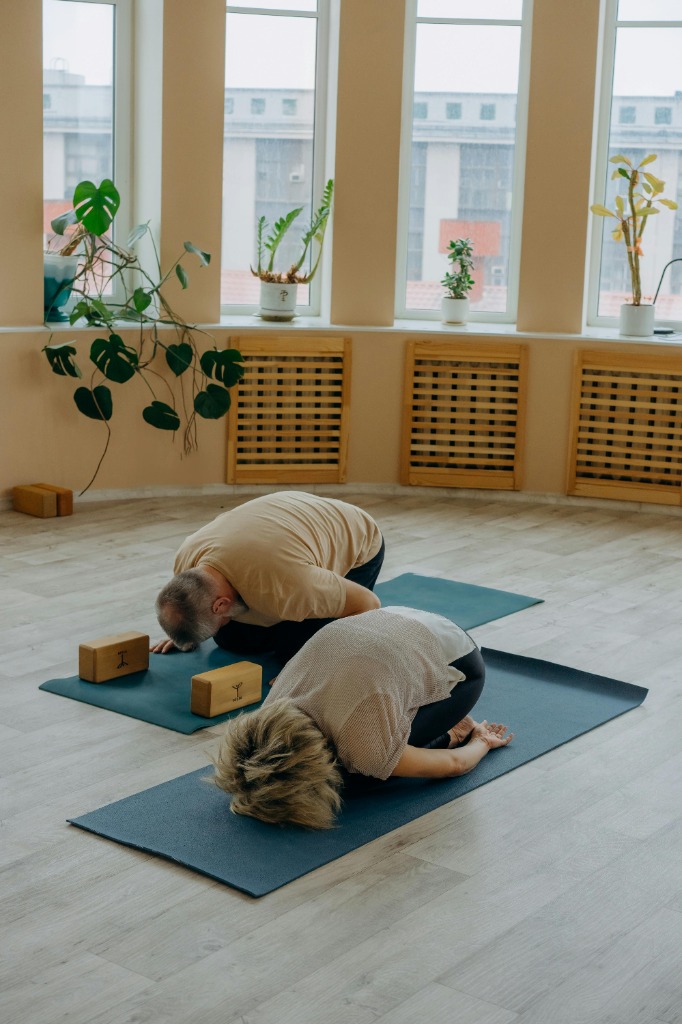
- Start on hands and knees
- Bring big toes together, knees wide
- Sit hips back toward heels
- Extend arms forward, forehead to mat
- Hold for 10 breaths (about 2 minutes)
2. Cat-Cow Flow (2 mins)
Target: Spinal Mobility
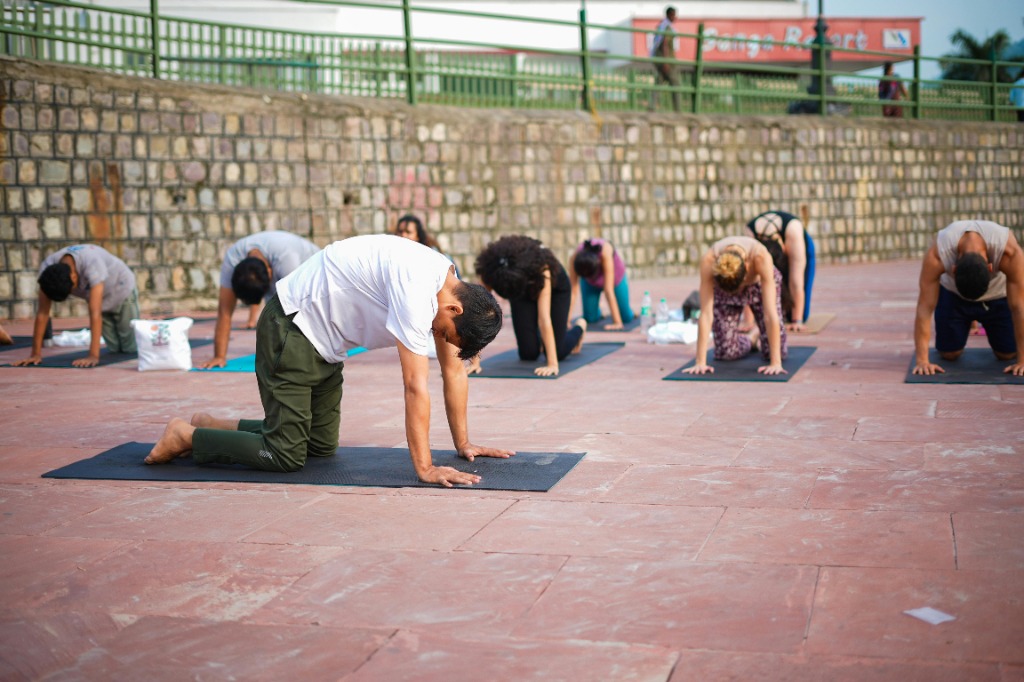
- Hands and knees, wrists under shoulders
- Cow (Inhale): Drop belly, lift chest/tailbone
- Cat (Exhale): Round spine, tuck chin
- Flow for 15-20 reps
3. Knee-to-Chest (3 mins)
Target: Lower Back, Glutes
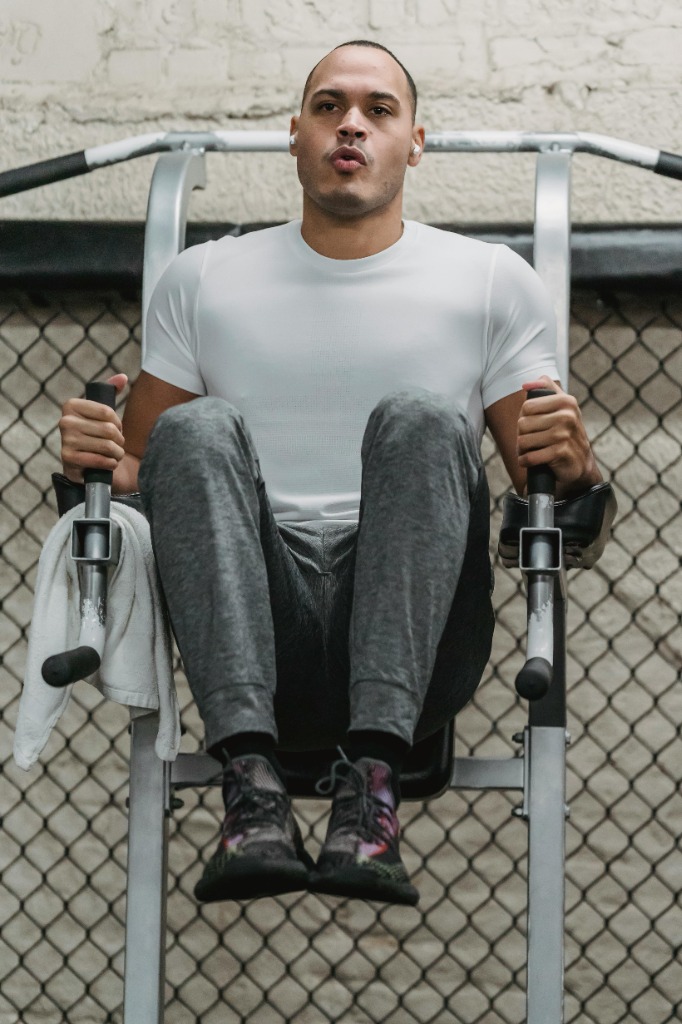
- Lie on back
- Pull right knee to chest, hold 45s
- Repeat left side
- Pull BOTH knees to chest, hold 60s
4. Supine Twist (2 mins/side)
Target: Rotation, Obliques

- Lie on back, knees to chest
- Arms in "T" position
- Drop both knees to right side
- Turn head to left
- Hold 2 mins, switch sides
5. Pelvic Tilts (2 mins)
Target: Core Activation
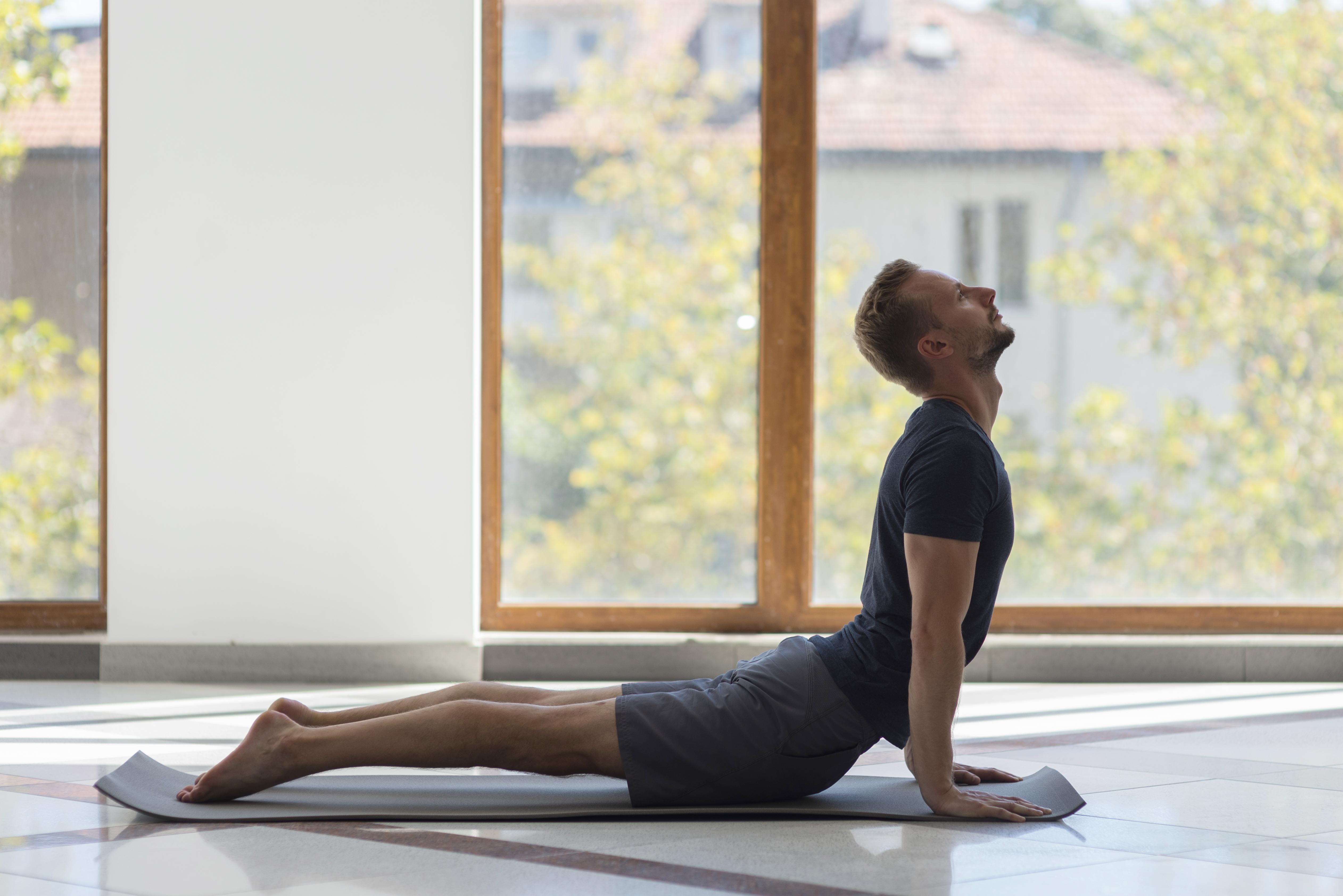
- Lie on back, knees bent, feet flat
- Flatten lower back against floor (posterior tilt)
- Hold 5s, engaging abs
- Release to neutral. Repeat 20x.
Intermediate (Week 3-4)
6. Standing Hip Flexor (90s/side)
Target: Psoas (Major Cause)

- Lunge position: Right foot forward, left knee down
- Tuck pelvis under (CRITICAL)
- Shift weight forward until stretch in front hip
- Raise left arm, lean right
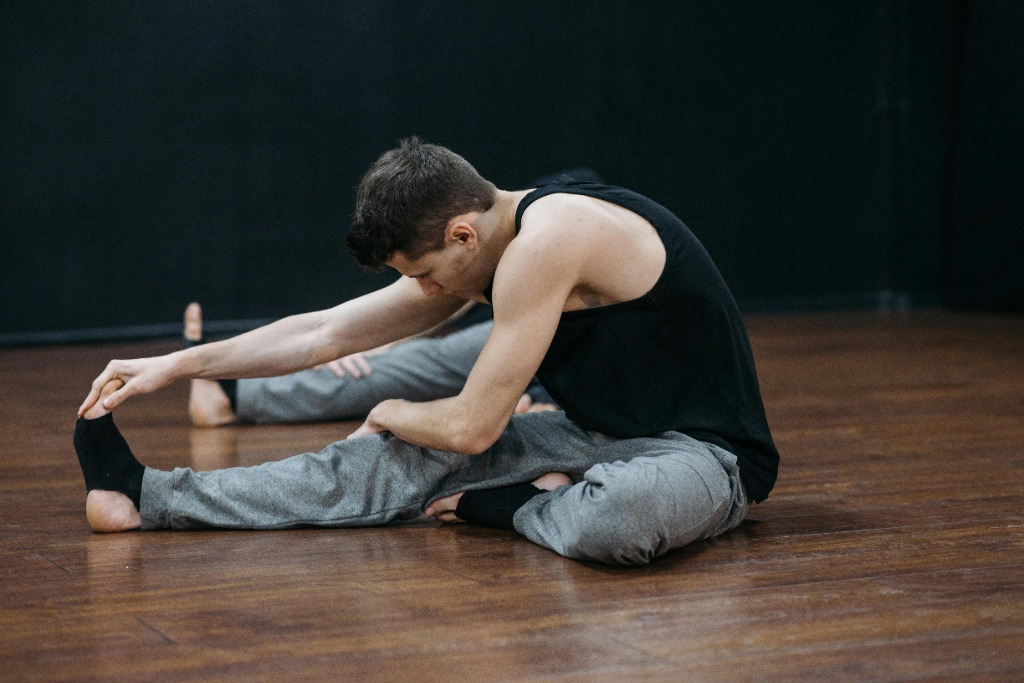
7. Hamstring Stretch (90s/leg)
Target: Hamstrings
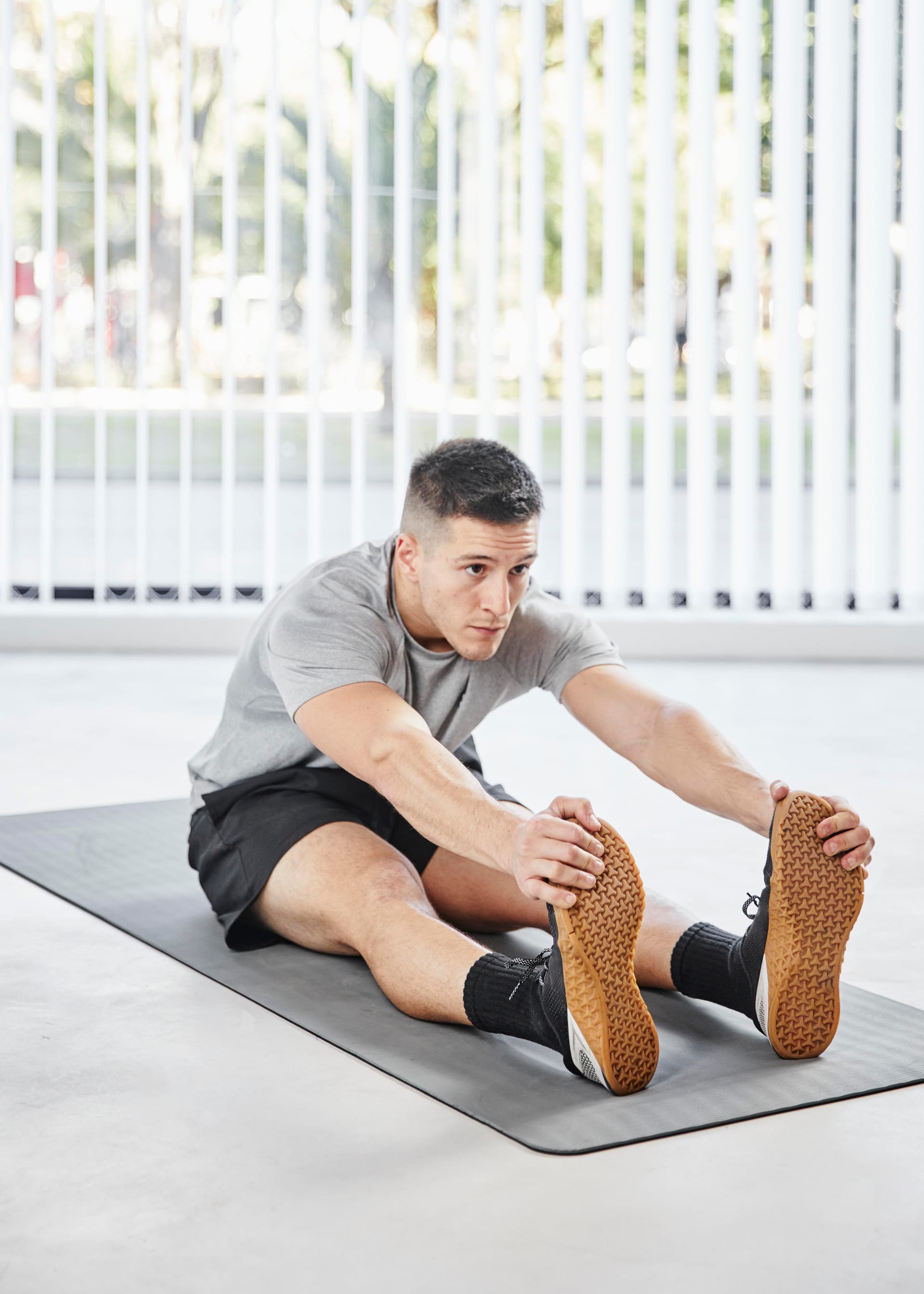
- Sit on floor, legs extended straight
- Hinge forward at the hips
- Reach hands towards feet
- Keep back relatively flat. Hold 90s.
Advanced (Week 5+)
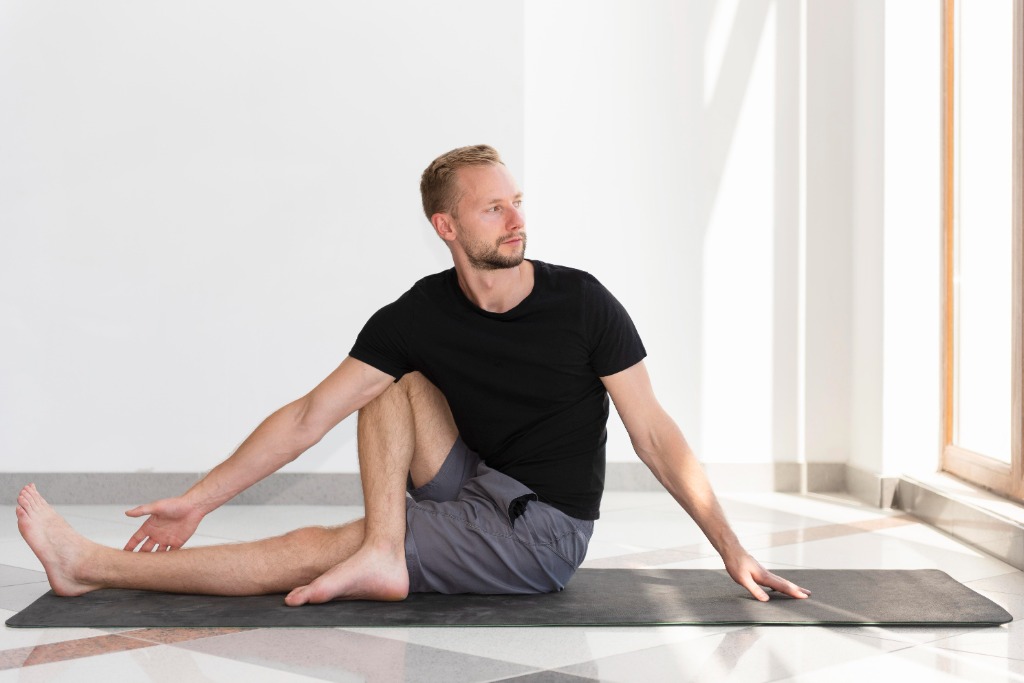
8. Seated Spinal Twist (3 mins/side)
Target: Deep Hip/Spine
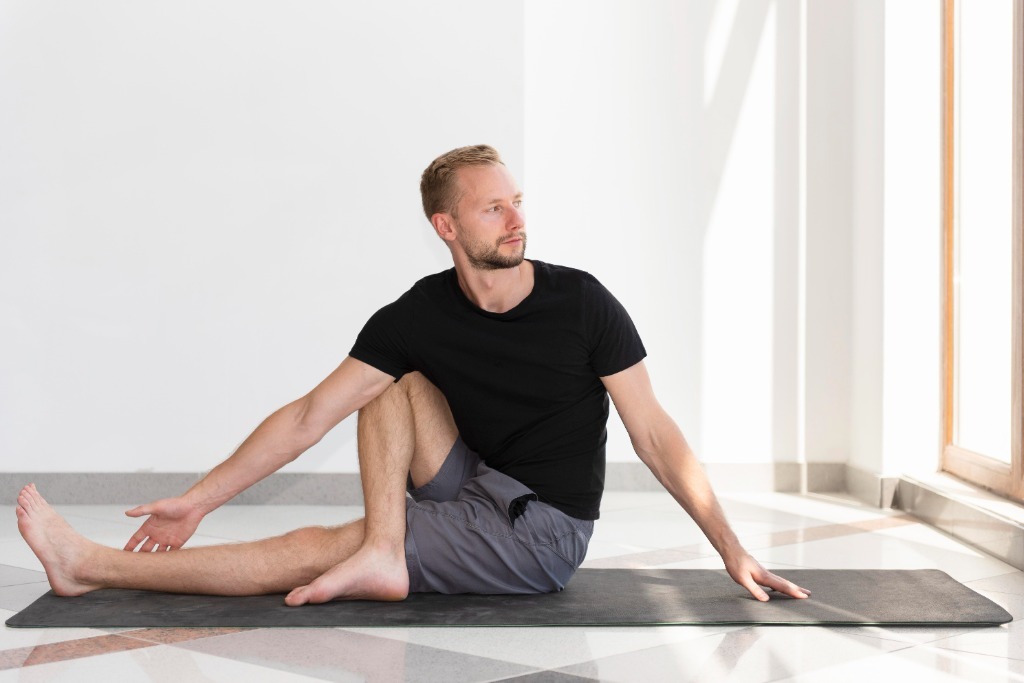
- Sit with legs straight, bend one knee
- Place foot of bent leg over opposite thigh
- Twist torso towards the bent knee
- Hold 3 mins per side.
Upper Back (Thoracic) Relief
Beginner Level (Week 1-2)
1. Doorway Chest Stretch (2 mins)
Target: Pectorals
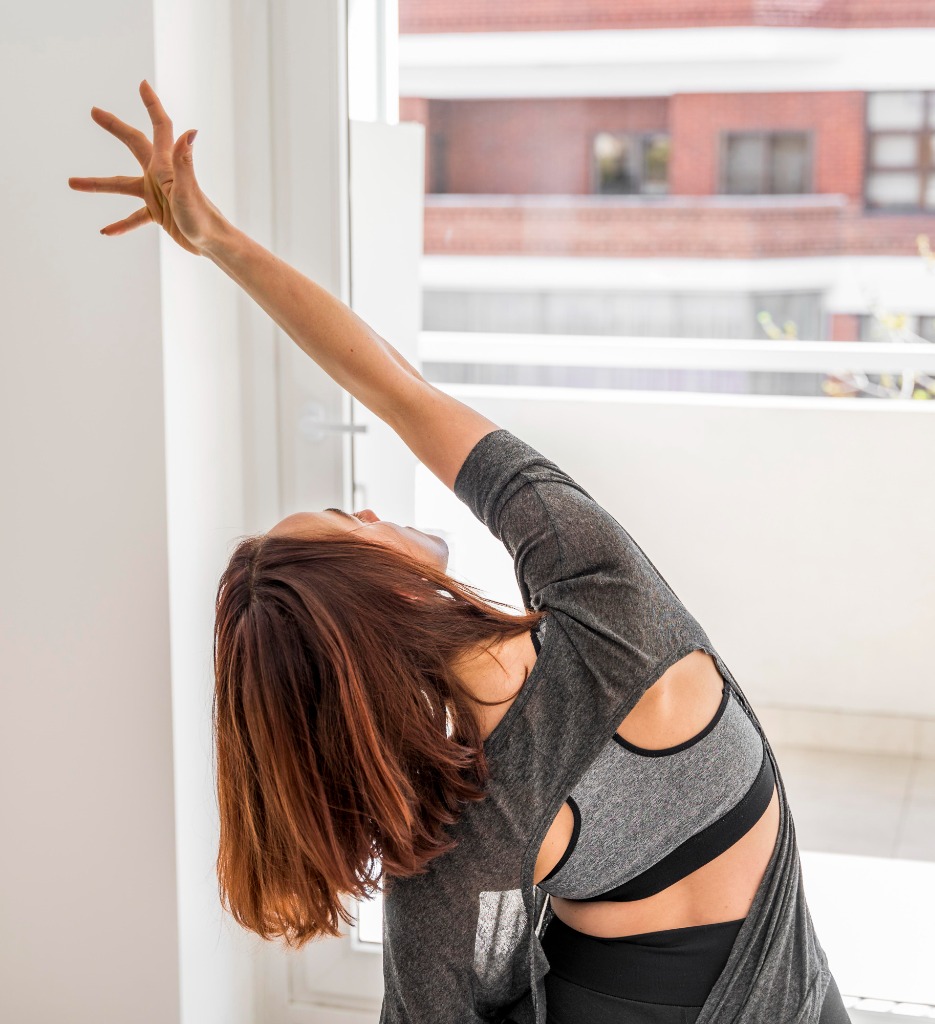
- Stand in doorway
- Forearm on frame (90 degrees)
- Step through until chest stretches
- Hold 2 mins per side
2. Thread The Needle (2 mins)
Target: Spinal Rotation
- Hands and knees
- Slide right arm under body to left
- Rest shoulder/head on floor
- Hold 2 mins per side
3. Thoracic Cat-Cow (2 mins)
Target: Mid-Back Mobility
- Focus on lifting CHEST (Cow)
- Focus on rounding BETWEEN SHOULDER BLADES (Cat)
4. Seated Neck Release (90s)
Target: Upper Traps

- Sit tall, drop right ear to shoulder
- Hand gently on head (no pulling)
- Hold 90s per side
5. Eagle Arms (90s)
Target: Rhomboids
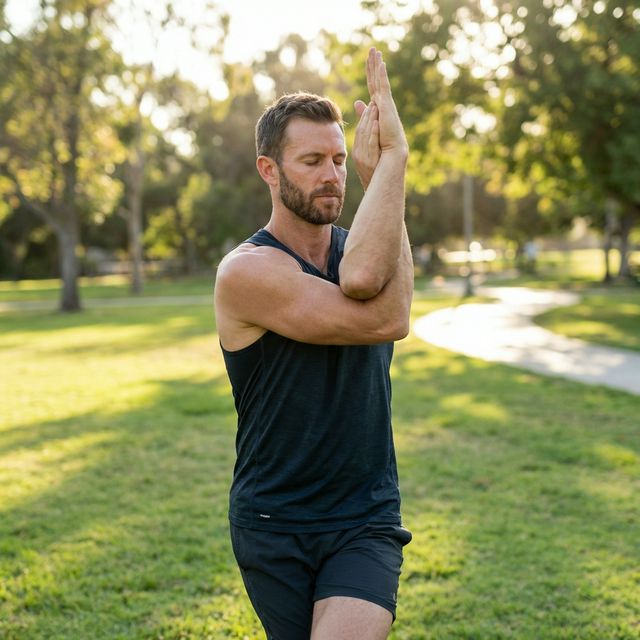
- Wrap right arm under left
- Lift elbows to shoulder height
- Round upper back slightly
Intermediate (Week 3-4)
6. Foam Roller Extension (2 mins)
Target: Reverse Hunch
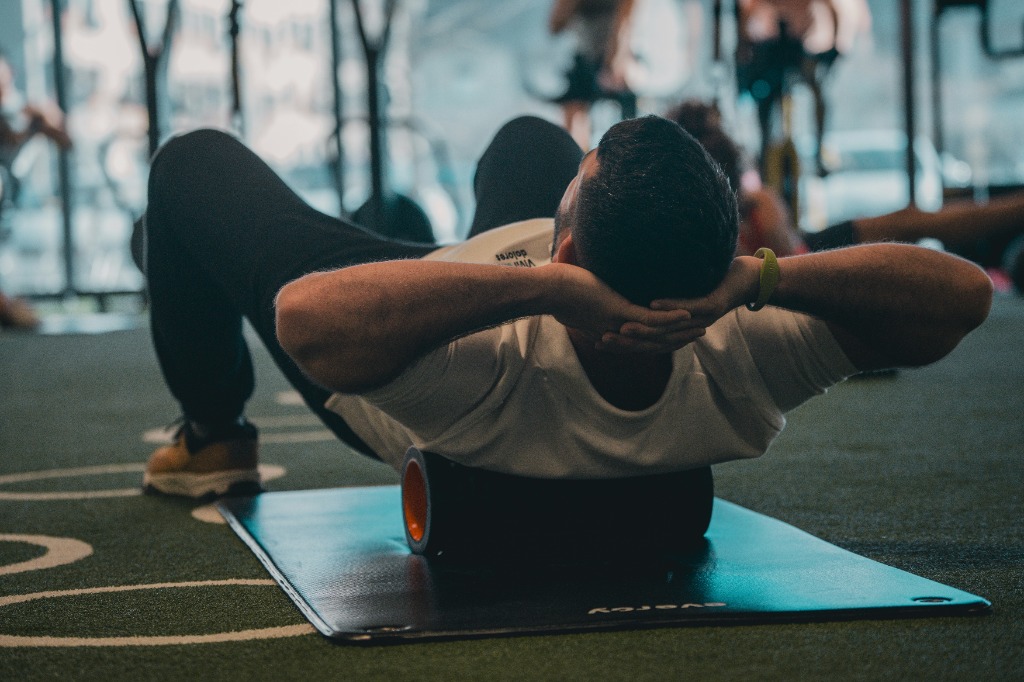
- Roller perpendicular to upper back
- Support head with hands
- Lean back over roller
- Hold 10s, move down inch, repeat
7. Wall Reach Lat Stretch (90s)
Target: Lats
- Hand high on wall
- Hinge at hips, sink chest down
- Feel stretch from armpit to hip
Advanced (Week 5+)
8. Prone Cobra (2 mins)
Target: Deep Extension
- Lie face down, hands by ribs
- Lift chest using back muscles
- Look slightly up
- Hold 30s, repeat 4x
Sciatic Nerve Relief
Beginner Level (Week 1-2)
1. Knee-to-Opp-Shoulder (2 mins)
Target: Piriformis
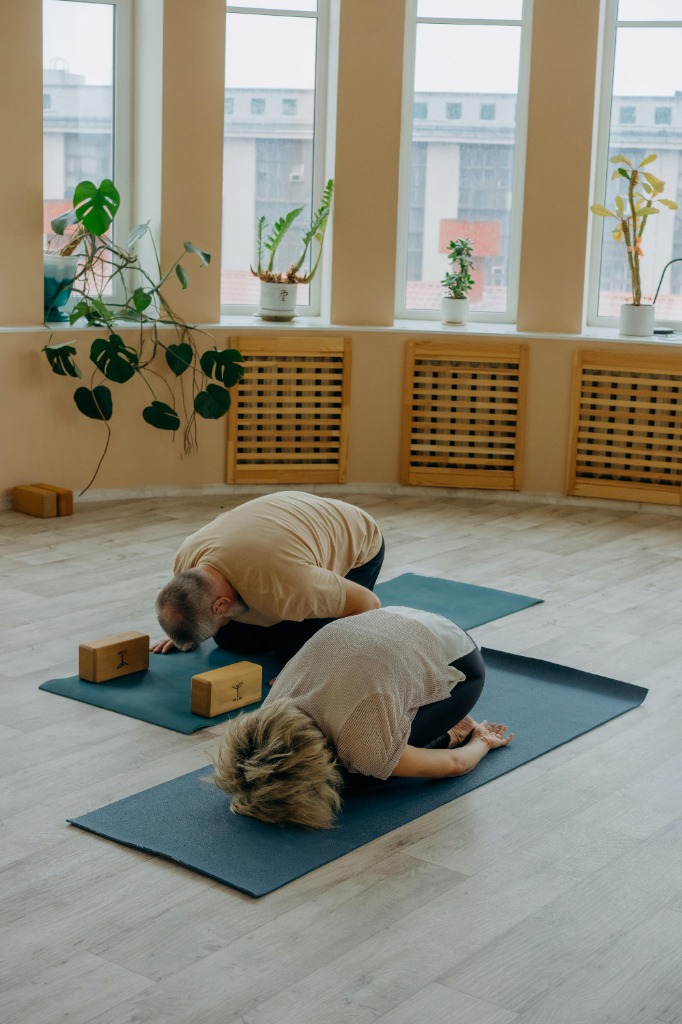
- Lie on back, bend right knee
- Pull knee toward LEFT shoulder (diagonal)
- Hold 2 mins per side
2. Seated Piriformis (2 mins)
Target: Glutes
- Sit in chair, figure-4 legs
- Lean forward with flat back
- Hold 2 mins per side
3. Supine Figure-4 (2 mins)
Target: Deep Glutes
- Lie on back, cross ankle over knee
- Pull thigh toward chest
- Hold 2 mins
4. Standing Hamstring (2 mins)
Target: Hamstrings
- Heel on low step/chair
- Leg straight, hinge at hips
- Keep back flat
Intermediate (Week 3-4)
5. Sciatic Nerve Floss (2 mins)
Target: Nerve Mobility
- Sitting. Leg straight + Head UP
- Knee bend + Head DOWN
- Alternate 20x. Gentle.
6. Pigeon Pose (3 mins)
Target: Deep Rotators
- Right knee forward, leg back
- Square hips, lower torso
- Hold 3 mins per side
Advanced (Week 5+)
7. Reclining Spinal Twist (3 mins)
Target: Decompression
- Lie on back. Knee to chest.
- Guide knee across body.
- Look opposite way. Hold 3 mins.
Hip & Pelvis Relief
Beginner Level (Week 1-2)
1. 90/90 Hip Stretch (2 mins)
Target: Rotation
- Sit on floor. Right leg front 90°, left side 90°
- Sit tall over front leg
- Hold 2 mins then switch
2. Low Lunge (2 mins)
Target: Flexors
- Right foot forward, knee down
- Tuck tailbone (posterior tilt)
- Shift forward
3. Butterfly Stretch (3 mins)
Target: Inner Thighs
- Soles of feet together
- Knees out to sides
- Fold forward gently
4. Supine Hamstring (2 mins)
Target: Hamstrings
- Lie on back with strap
- Leg straight up
- Hold 2 mins
Intermediate (Week 3-4)
5. Lizard Pose (2 mins)
Target: Deep Groin
- Low lunge. Hands INSIDE front foot.
- Lower to forearms if able.
- Hold 2 mins.
6. Frog Pose (3 mins)
Target: Adductors
- Knees WIDE. Feet turned out.
- Lower to forearms.
- Rock gently back. Intense.
Advanced (Week 5+)
7. King Pigeon (3 mins)
Target: Quads/Hip
- Start in pigeon pose
- Bend back knee, grab foot
- Pull heel to buttock
Hip Balance
Neck & Trap Relief
1. Chin Tucks (2 mins)
Pull head straight back (double chin). 20 reps. Strengthens deep neck flexors.
2. Neck Side Bends (90s)
Ear to shoulder. Hand weight only. Releases upper traps.
3. Neck Rotation (90s)
Look over shoulder. Hold.
4. Upper Trap Stretch (90s)
Sit on hand (anchors shoulder). Tilt head away.
5. Levator Scapulae (2 mins)
Look down at armpit. Gentle pull.
6. Doorway Arms High (2 mins)
Elbows above shoulder height in doorway. Opens pec minor.
When & How to Stretch
Option 1: Morning (GENTLE Only)
Best for: Stiffness.
Caution: Spine is hydrated. NO deep bending. Do Cat-Cow only.
Option 2: Midday Micro-Breaks
Best for: Interrupting sitting.
Do Doorway stretch, hip lunge every 2 hours.
Option 3: Evening (OPTIMAL)
Best for: Deep flexibility.
Spine is warm. Do full 15-25 min routine.
Building the Habit
- IF I stand up from desk, THEN I do 3 cat-cows.
- IF I finish dinner, THEN I do my evening routine.
- IF 9 PM hits, THEN I do my lower back stretches.
Troubleshooting
Problem: Hurts More?
Cause: Too aggressive (8/10 pain).
Solution: Back off to 5/10. Your muscles are guarding.
Problem: No Improvement?
Cause: Lifestyle or Weakness.
Solution: Add core strengthening. Stop sitting 8 hours.
Problem: Wake Up Stiff?
Cause: Sleep position or inflammation.
Solution: Fix mattress. Anti-inflammatory diet.
Problem: "No Time"?
Reality: 10 mins daily beats 60 mins weekly.
Solution: Stretch while watching TV.
Progression Tracking
Ready for Next Level?
- Can hold all stretches comfortably
- 14+ days consistency
- 30-40% pain reduction
Tracking Template
Week 1 Pain (1-10): ____
Week 2 Pain (1-10): ____
Week 4 Pain (1-10): ____
Goal: 50% reduction in 6 weeks.
Common Questions
How long should I hold a stretch?
Research shows 60 seconds is optimal. 15 seconds is too short. 2 minutes is best for deep release.
Should I stretch before or after exercise?
Before: Dynamic only (movements). After: Static (holds). Muscles are warm after.
Can I stretch every day?
Yes. Acute pain = 2-3x daily. Chronic = 1x daily.
When to see a doctor?
Red flags: Loss of bowel control, leg weakness, numbness, or no improvement after 6 weeks.
Foam rolling vs Stretching?
Roll FIRST to break adhesions. Stretch SECOND to lengthen. Both > Either.
✅ Your Back Pain Relief Summary
The Core Principles:
- Diagnose location first - Lower back ≠ upper back ≠ sciatic pain
- Target specific causes - Hip flexors, hamstrings, chest, etc.
- Progress gradually - Beginner → Intermediate → Advanced over 6+ weeks
- Consistency beats intensity - 15 minutes daily > 60 minutes weekly
- Combine with lifestyle changes - Stretching + posture + stress management
Your Stretch Prescription:
Your First Week Action Plan:
- Day 1-2: Complete pain location assessment, save your beginner routine
- Day 3-5: Practice beginner routine daily, even if awkward
- Day 6-7: Continue, notice what helps most
- Week 2: Assess progress (30% pain reduction expected)
What's Your Back Pain Location?
I want to hear from you. Which pain location type describes your back pain? Lower back? Sciatic? Hip-related?
Have you tried stretching before? What happened? Drop a comment below and let's support each other in becoming pain-free.
Comments are currently disabled for this preview.
Related Articles
Medical Disclaimer
This article provides information about stretching exercises for muscular back pain for educational purposes only. It is not a substitute for professional medical advice, diagnosis, or treatment. If you have severe back pain, acute injury, herniated discs, spinal conditions, or any of the "red flag" symptoms mentioned (loss of bowel/bladder control, leg weakness, numbness), see a healthcare provider immediately. These stretches are designed for muscular tightness and mild-moderate chronic back pain. Always consult with your doctor before starting any new exercise program.
"Consistency beats intensity."
15 minutes a day can undo 8 hours of damage. Pick your routine. Start tonight.