
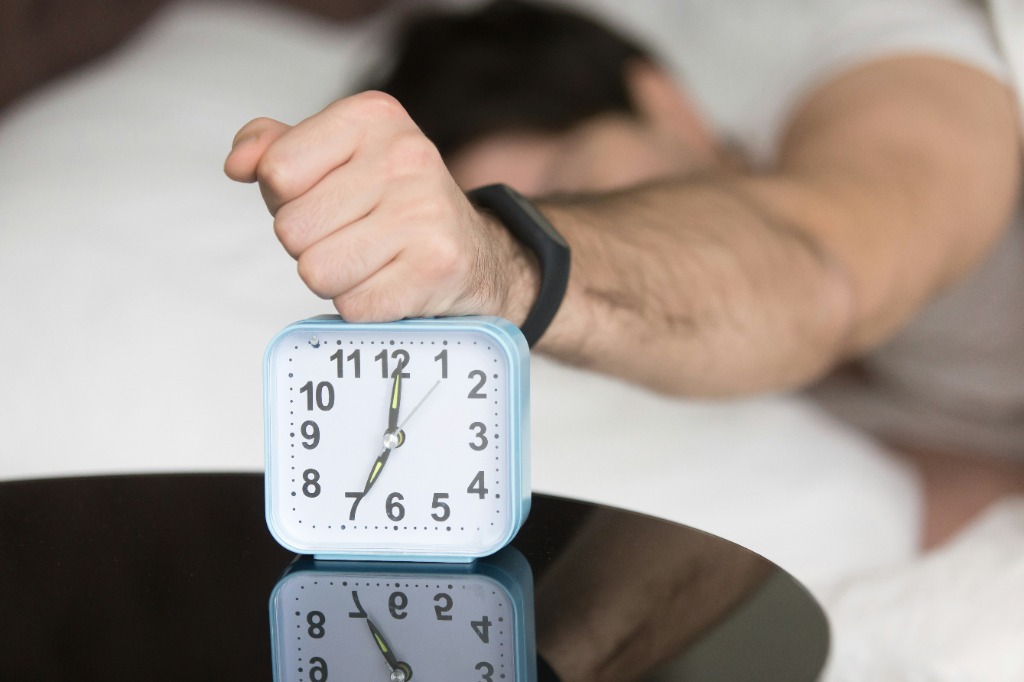
How do you reset your sleep schedule fast? The most effective way is to anchor your wake time (waking at the same time every day, even weekends) and get 15 minutes of bright sunlight within 30 minutes of waking. This signals your brain to start its 16-hour countdown to melatonin production.
"Your circadian rhythm is like a biological clock. If you don't set it in the morning, it won't know when to ring at night."
Whether you're a night owl by choice or a shift worker by necessity, your body's internal clock is controlled by specific biological markers. By manipulating these markers—light, food, and temperature—we can force a full reset in as little as 14 days.
Sleep Myths That Keep You Stuck
Myth: "Just Force Yourself to Go to Bed Earlier"
Trying to sleep at 10 PM when your rhythm is set for 2 AM leads to 'sleep onset frustration.' You can't force the hormones; you must shift the markers.
Dong L, Harvey AG, et al.
"Is improving sleep and circadian problems in adolescence a pathway to improved health?"
Sleep Medicine Reviews (2019)
PubMed: 31773734Myth: "You Can Catch Up on Weekends"
Sleeping in on Saturday creates 'social jet lag,' confusing your SCN and making Monday mornings physiologically painful.
Depner CM, et al.
"Ad libitum Weekend Recovery Sleep Fails to Prevent Metabolic Dysregulation"
Current Biology (2019)
PubMed: 30827911Your Natural Daily Rhythm

Your body's master clock (SCN) coordinates every biological process on a strict 24-hour schedule.
| Time | Event | Hormone Shift |
|---|---|---|
| 6-7 AM | Cortisol peaks (Natural Wake) | Cortisol ↑ Melatonin ↓ |
| 10-12 PM | Peak cognitive alertness | Stable energy levels |
| 7-9 PM | Melatonin begins rising | Melatonin ↑ Body Temp ↓ |
| 10-11 PM | Sleep window opens | Low cortisol, High Mel |
The 14-Day Circadian Reset
One rule: Intensity over extension. We shift the clock 15-30 minutes per day until your target is reached.

Morning light is the strongest 'Zeitgeber' (time-giver) for resetting your circadian clock.
Anchor Your Wake Time
The anchor point for your entire rhythm is when you first see light. You must choose a non-negotiable wake time and stick to it 7 days a week.Crucially, this means NO SNOOZE button. Hitting snooze fragments your wake signal, confusing your SCN immediately.
The 30-Minute Rule
Phase 1 Actions
- 1. No Snooze: Place alarm across the room.
- 2. Light First: 15 mins of direct sun.
- 3. No Napping: Build adenosine pressure.
Phase 02: Optimize Light Exposure (Days 4-7)
Controlling your light environment 'sandwiches' your circadian rhythm into place.
Morning Max
Brightest possible environment. Open all blinds. Work by a window.
Midday Moderate
Normal lighting is fine. Maintain alertness without over-stimulation.
Evening Dim
Reduce overheads. Switch to warm lamps after 8 PM.
Phase 03: The 90-60-30 Routine (Days 8-11)

A structured wind-down routine is safer than sleeping pills.
Physical Wind-Down
Stop physical activity. Final meal. Set thermostat to 65-68°F (18-20°C). Warm bath to drop core temp.
Mental Wind-Down
No stressful emails or news. Relaxing reading or light stretching only.
Sensory Wind-Down (Biological)
Zero screens. Complete darkness. This final lack of photon stimulation signals the pineal gland to release maximum melatonin.
Pro-Tip: The 20-Minute Rule (CBT-I)

Magnesium and Tryptophan-rich foods can reduce sleep onset latency.
Sleep-Supporting Nutrition
What you eat in the final 4 hours of your day creates the blood glucose and hormone profile necessary for deep REM sleep.
Eat These (Tryptophan + Low Glycemic)
Sweet potatoes, turkey, pumpkin seeds, tart cherries, Greek yogurt, or bananas.
Avoid These
Caffeine (after 2 PM): It has a 6-hour half-life; 25% remains in your brain after 12 hours.
Alcohol (within 4 hours): Fragments REM sleep.
Large heavy meals: Raises core body temp.
Exercise Timing
Exercise raises core body temperature and cortisol. Doing HIIT at 9 PM mimics the "Fight or Flight" response, telling your body it's time to be alert.

Morning movement anchors your cortisol peak early, helping you sleep better 16 hours later.
14-Day Reset Checklist
Phase 1-2 (Days 1-7)
- Wake up at EXACT same time (No snooze)
- 15 mins outdoor light immediately
- ZERO naps (Push through fatigue)
- Dim lights by 50% after sunset
Phase 3-4 (Days 8-14)
- Implement 90-60-30 wind-down
- No screens 60 mins before bed
- Cool room to 65-68°F (18°C)
- Weekend Rule: Wake within 30 mins of target
Common Questions
Typically 1-2 weeks for noticeable improvement, and about 4 weeks for full circadian entrainment where waking early feels natural.
Yes, but only strategically to shift your rhythm. Research shows it advances sleep timing by only 25-30 minutes. Use a low dose (0.3-1mg) 2-3 hours before target bedtime, then discontinue after week 1.
Sleeping in even 2 hours creates 'social jet lag' and resets your progress. Keep your wake time within 30 minutes of your weekday target even on weekends.