
"I'm not flexible enough." "I don't know any poses." "What if I look stupid?"Here's the truth: You don't need to contort into pretzel shapes. You just need a mat and a willingness to start.
In this guide, I'll walk you through a 4-week progressive practice designed specifically for complete beginners practicing at home. Each week builds on the last, introducing new poses and concepts at a pace that lets your body adapt safely.
Myths That Stop Beginners
You Need to Be Flexible
Reality Flexibility is a result of yoga, not a prerequisite. Saying you're too stiff for yoga is like saying you're too dirty for a shower.
Evidence A 2016 study found that beginners increased hamstring flexibility by 35% and shoulder flexibility by 28% after just 8 weeks.
Yoga Is Not a 'Real' Workout
Reality Yoga builds strength and burns calories. Holding poses requires significant muscular effort.
Evidence A 2015 study found that 12 weeks of yoga increased muscle strength by 24%, improved balance by 25%, and reduced body fat by 6%.
It's Only for Women
Reality Yoga was historically practiced by men. Pro athletes (NFL, NBA) use it for injury prevention.
Evidence Studies show men gain the same strength, flexibility, and mental health benefits as women.
Setting Up Your Home Practice
Essentials
- 1. Yoga Mat: Or a non-slip surface.
- 2. Comfy Clothes: Anything you can move in.
- 3. Space: Just 6x3 feet of floor space.
- 4. Time: 20 minutes uninterrupted.
What You Don't Need
- ❌ Expensive Lululemon gear.
- ❌ Candles or incense.
- ❌ A dedicated "yoga room".
- ❌ Prior flexibility.
Mental Space Matters
Your 4-Week Roadmap
| Week | Theme | Focus | Time |
|---|---|---|---|
| Week 1 | Foundation | Breath & Core Poses | 15-20 min |
| Week 2 | Strength | Standing Poses | 20-25 min |
| Week 3 | Balance | Hips & Stability | 25-30 min |
| Week 4 | Flow | Chaining Sequences | 30-35 min |
Foundation & Breathing
Goal: Learn to breathe and master the core stability poses. Consistency is key.
1. Breath Awareness
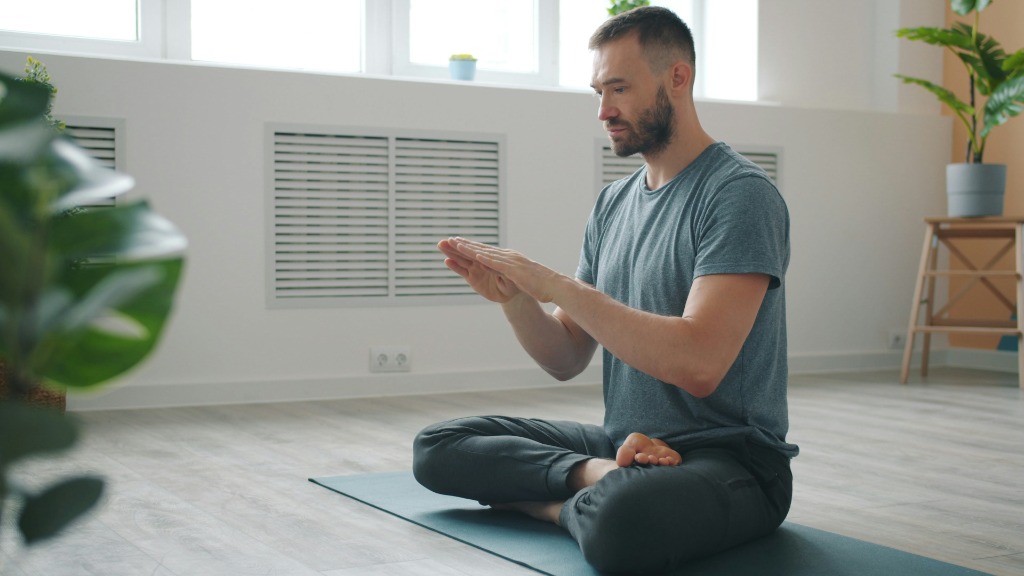
The quality of your breath determines the quality of your practice.
The Secret Weapon: Ujjayi Breath
- Sit comfortably with spine tall.
- Inhale through nose for 4 counts.
- Constrict back of throat (like fogging a glass).
- Exhale through nose for 4 counts, making an "ocean sound."
- Repeat for 5 minutes.
2. Mountain Pose (Tadasana)
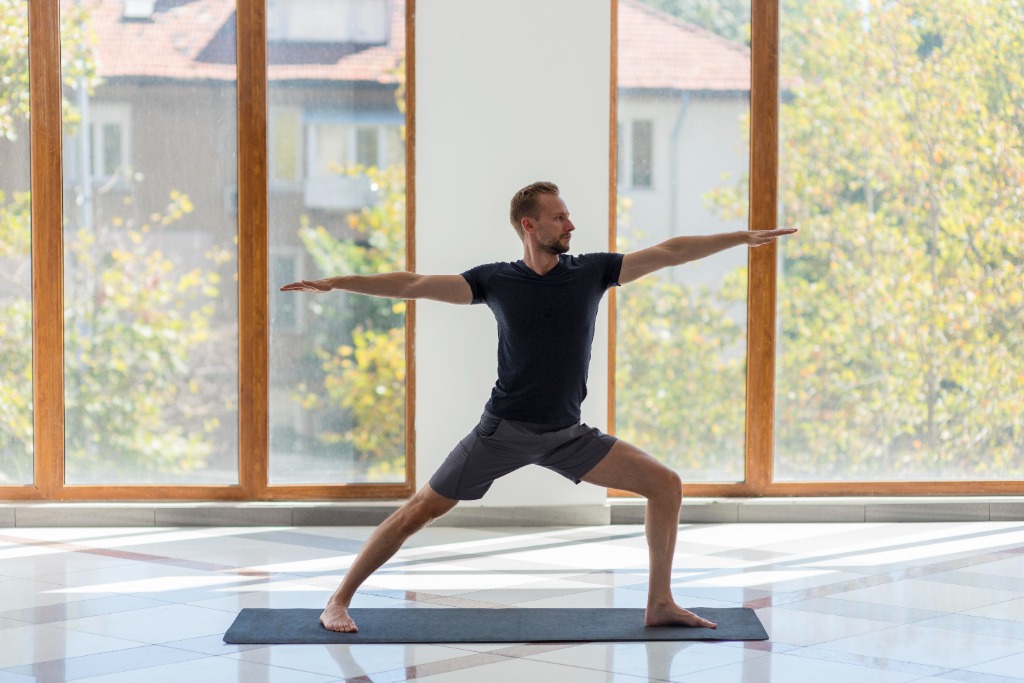
Strong standing posture is the foundation of specific strength.
- Feet hip-width apart, all four corners grounded.
- Lift kneecaps to engage thighs (don't lock knees).
- Tuck tailbone slightly, draw navel to spine.
- Roll shoulders back and down.
- Palms face forward, chest open.
4. Child's Pose (Balasana)
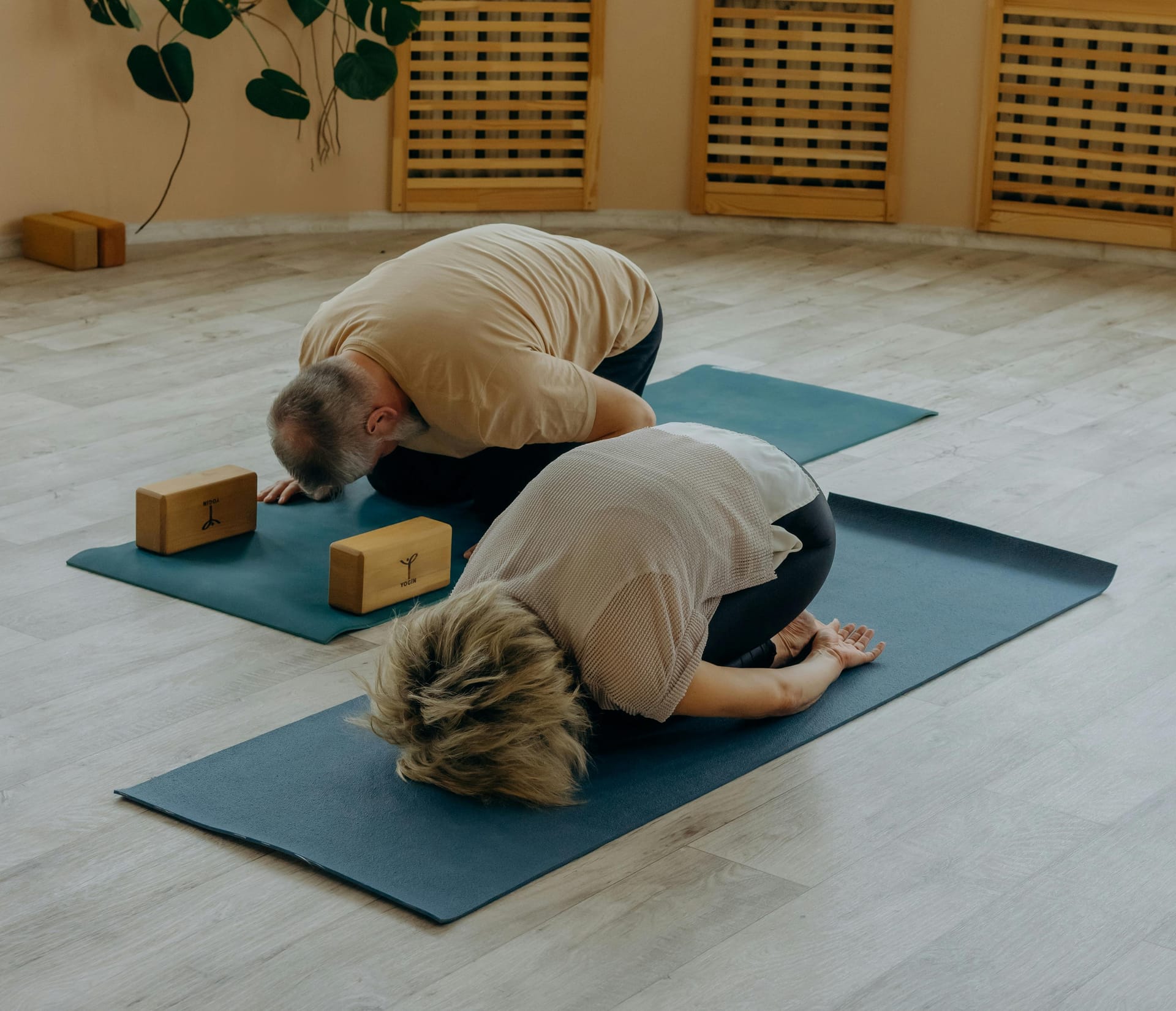
A restorative pose. Use blocks under your hands or forehead for extra support if needed.
Instructions: From knees, bring big toes to touch and widen knees. Sit hips back onto heels and walk hands forward. Rest forehead on mat.
5. Downward Facing Dog
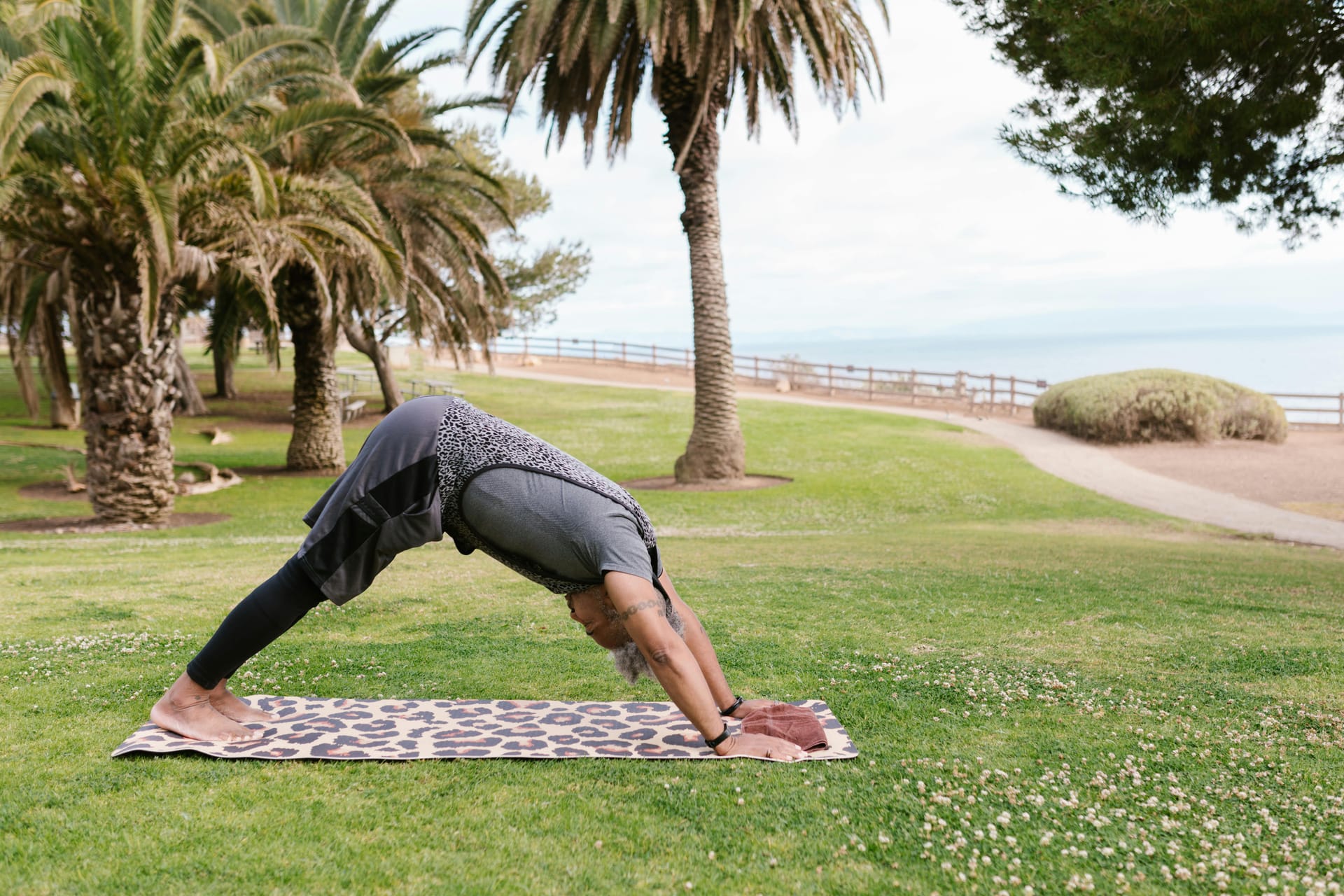
A total body stretch that strengthens arms and shoulders.
Instructions: From hands and knees, tuck toes and lift hips up and back. Bend knees generously to prioritize a straight spine over straight legs. Press the floor away.
Week 1 Daily Sequence (15 min)
- Centering: Seated Ujjayi Breathing (3 min)
- Warmup: Cat-Cow Flow (10 rounds)
- Hold: Mountain Pose (10 slow breaths)
- Movement: Down Dog (Pedal feet out)
- Rest: Child's Pose (3 min)
End-of-Week Check-In
- ✅ Can you maintain ujjayi breath throughout practice?
- ✅ Do you know how to find child's pose when you need rest?
- ✅ Can you hold downward dog for 5 breaths (even with bent knees)?
If yes to all, move to Week 2.
Standing Strength
This week is about legs and fire. We introduce the Warriors and standing balance.
1. The Warrior Series (Virabhadrasana)
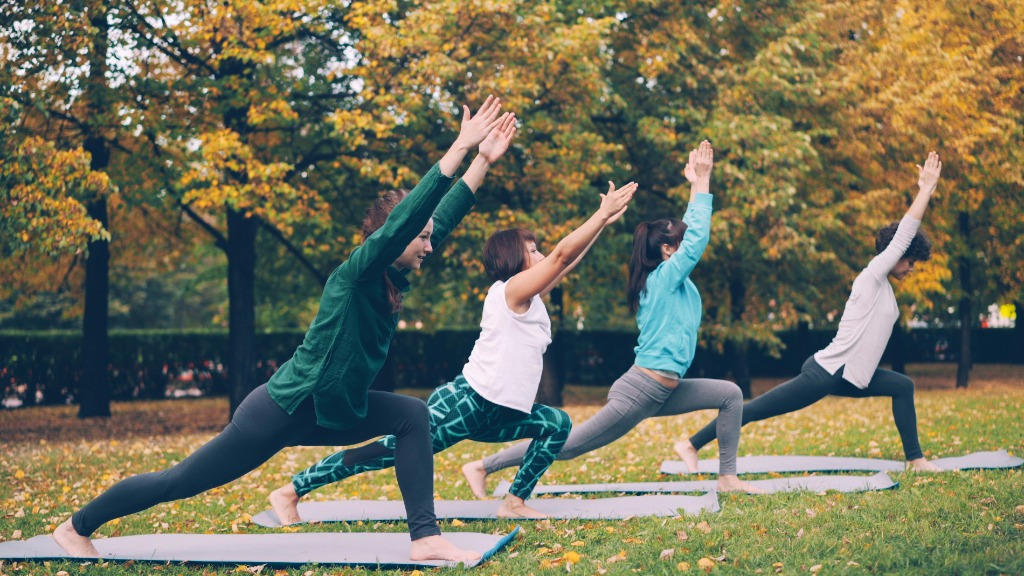
Warriors build heat, focus, and lower body stability.
Warrior I
Hips square to front. Back heel grounded at 45 degrees. Arms reach overhead.
Warrior II
Hips open to side. Back foot parallel to short edge of mat. Arms parallel to floor.
2. Triangle Pose (Trikonasana)
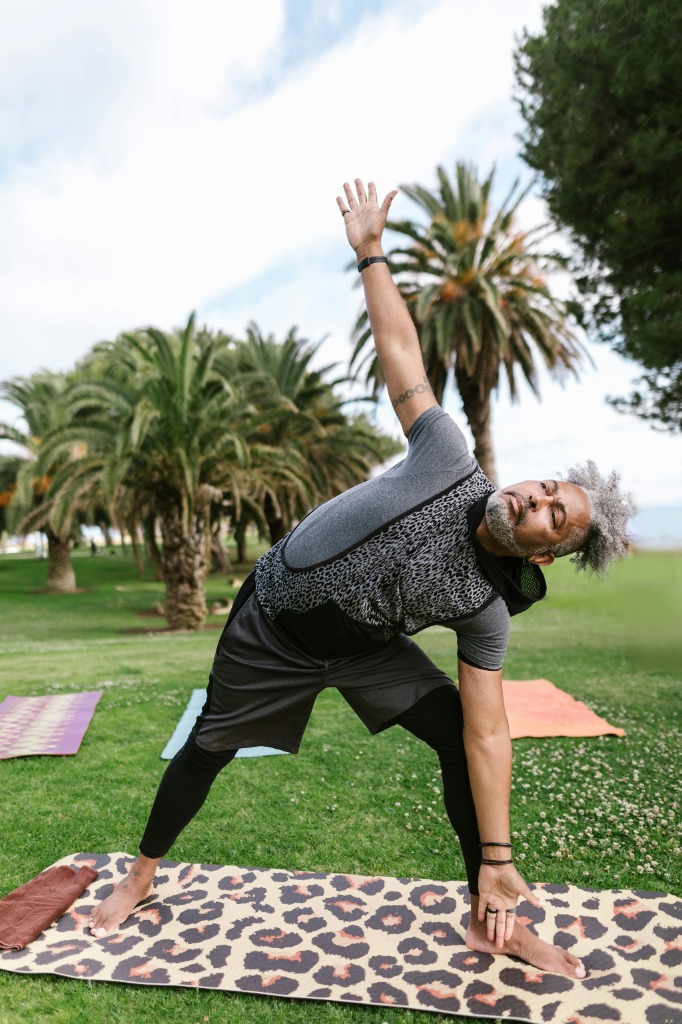
Creates space in the hips and strengthens the core.
Instructions: Straighten front leg (keep a micro-bend). Reach forward with front hand, then hinge at hips to bring hand to shin or ankle. Top arm reaches to sky.
3. Chair Pose (Utkatasana)
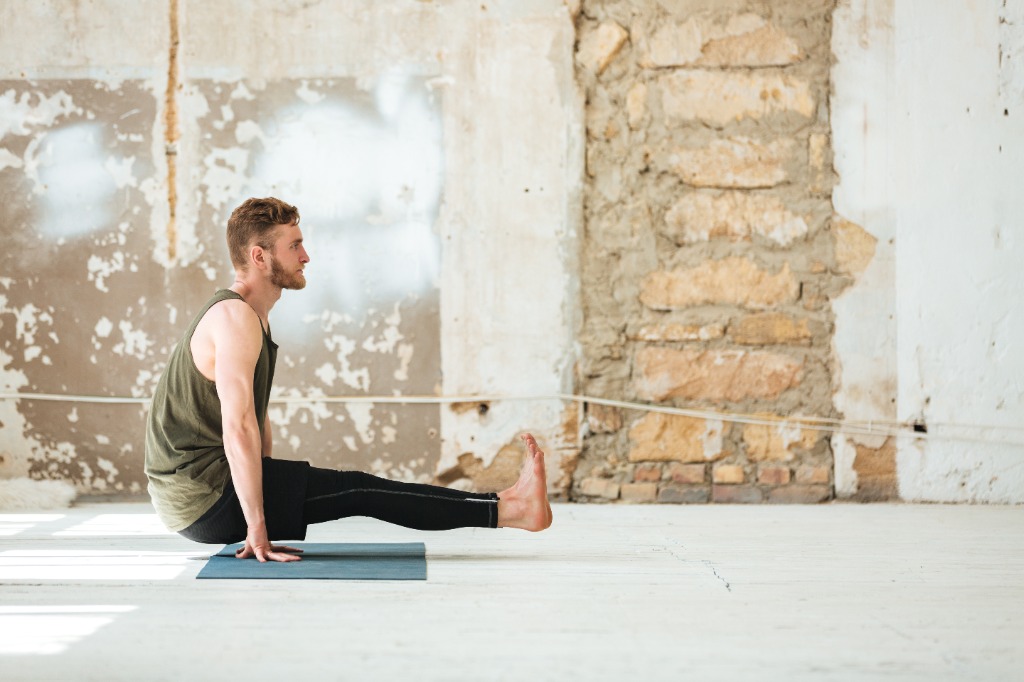
The 'fierce' pose. It challenges your mental resolve as much as your quads.
Instructions: Feet together or hip-width. Sit hips back and down as if into a chair. Arms reach up. Keep chest lifted.
Common Mistake: Knee Mechanics
End-of-Week Check-In
- ✅ Can you hold Chair Pose for 5 breaths without excessive shaking?
- ✅ Do you understand how to align Warrior poses?
- ✅ Can you move between poses with breath awareness?
Balance & Flexibility
Now we challenge stability with Tree Pose and open hips with Pigeon.
1. Tree Pose (Vrksasana)
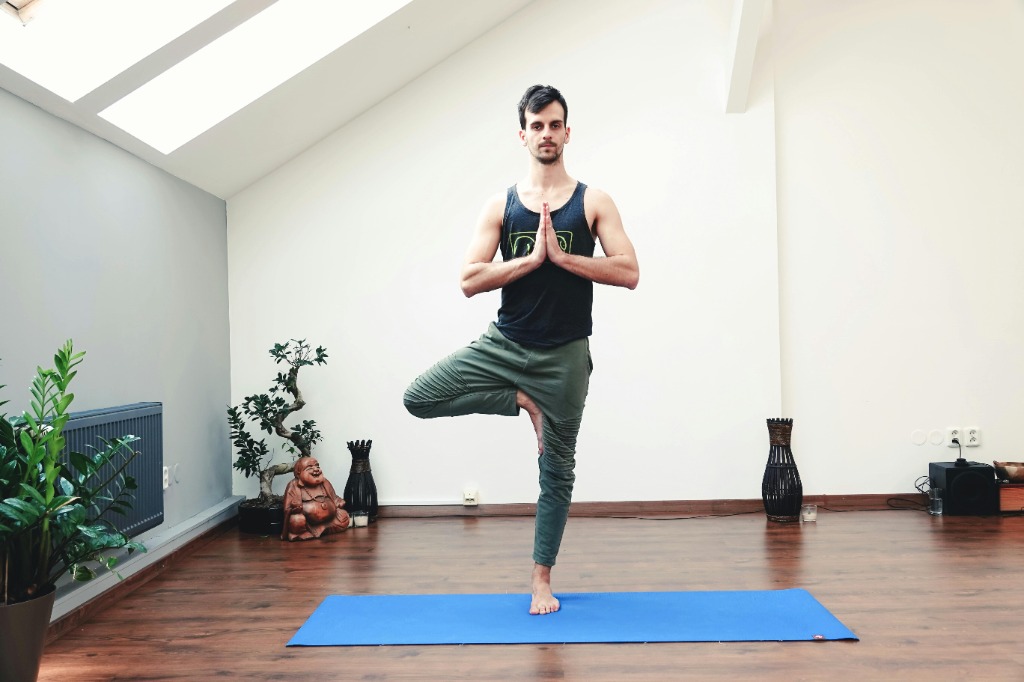
Balance is dynamic. It's okay to wobble; that's your brain building new neural pathways.
🌳 Tree Pose Tips
- Place foot on calf or thigh.
- NEVER place foot directly on knee joint.
- Find a "Drishti" (unmoving focal point).
2. Pigeon Pose (Eka Pada Rajakapotasana)
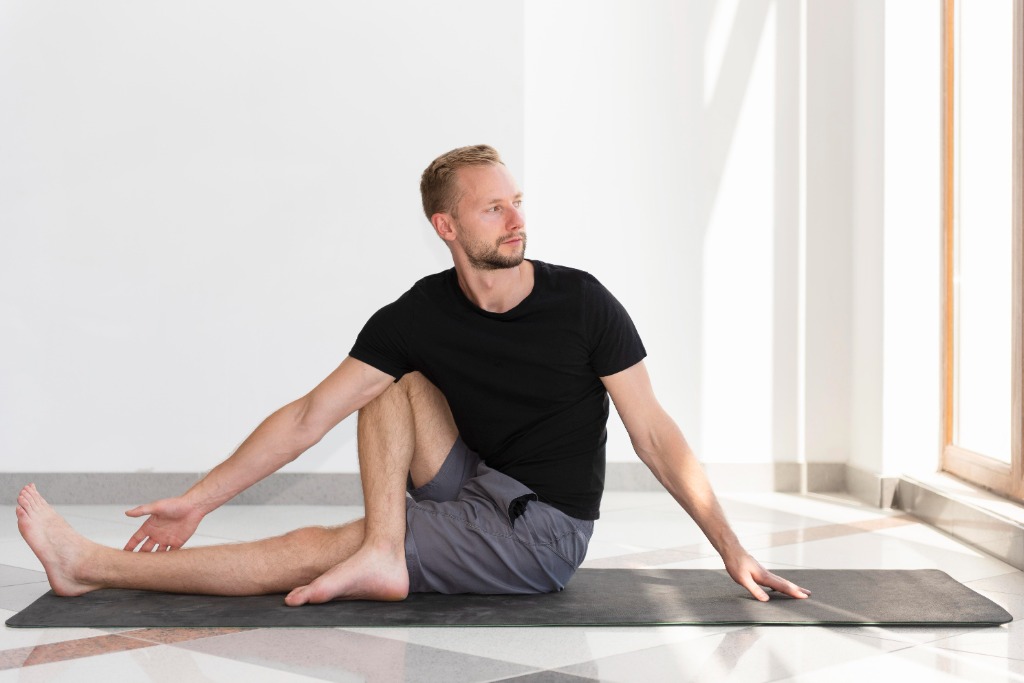
A deep hip opener. If full Pigeon is too intense, try this seated modification.
🕊️ Hip Release
The ultimate release for tight hips. This pose releases emotional tension tailored in the hips.
Safety Warning
If you feel ANY pain in your knee, STOP immediately. Do this on your back (Figure-4 stretch) instead to protect your ligaments.
End-of-Week Check-In
- ✅ Can you hold Tree Pose for 5+ breaths?
- ✅ Do you feel a stretch (not pain) in Pigeon Pose?
- ✅ Can you maintain ujjayi breath even in challenging poses?
Vinyasa Flow
Putting it all together into a dance. Linking breath with movement. One breath, one motion.
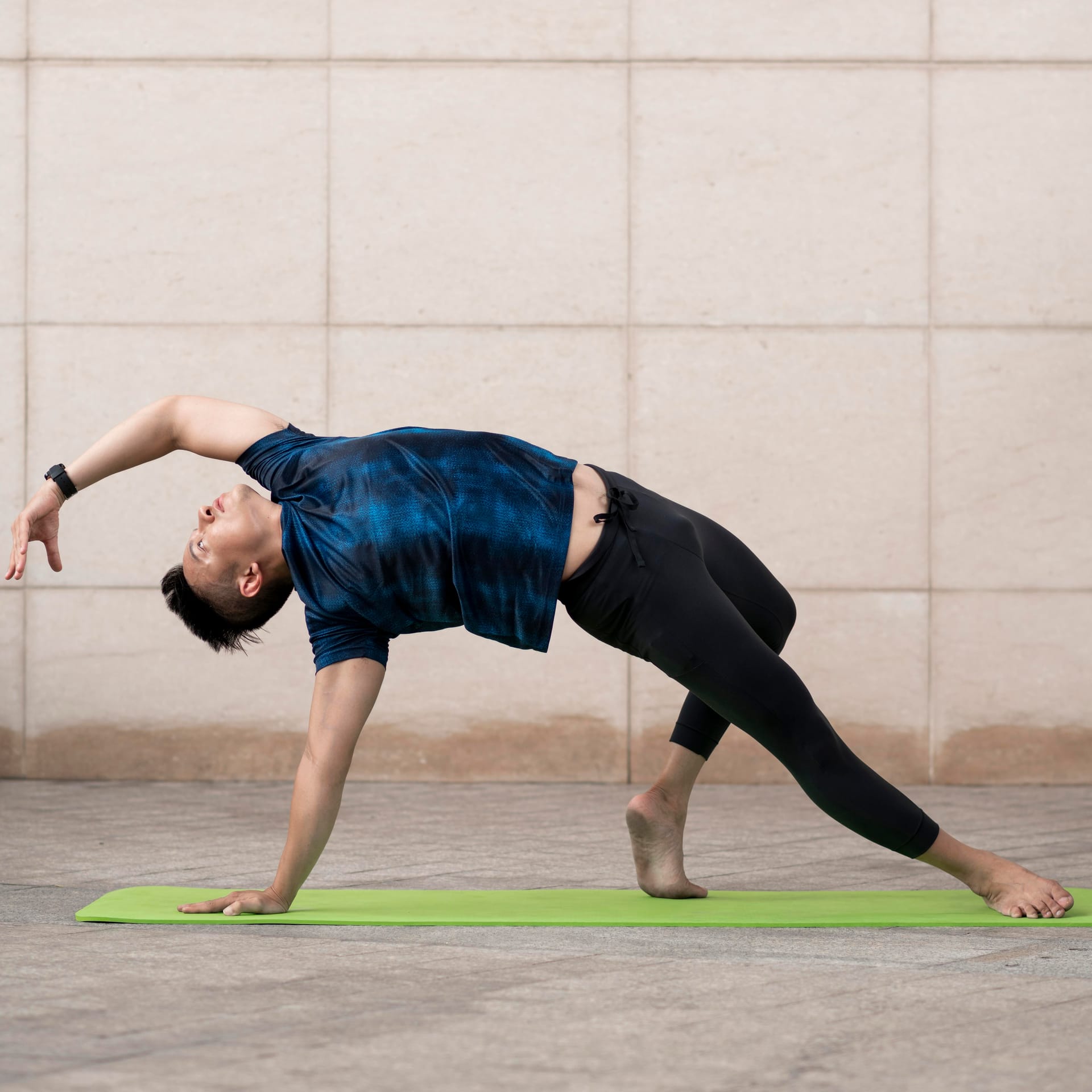
Linking breath with movement creates a moving meditation.
☀️ Sun Salutation A
Winning the Mental Game
I Don't Have Time
I Get Bored
"One month from now, you'll be amazed."
Your post-yoga glow is waiting. Roll out the mat. Day 1 starts now.