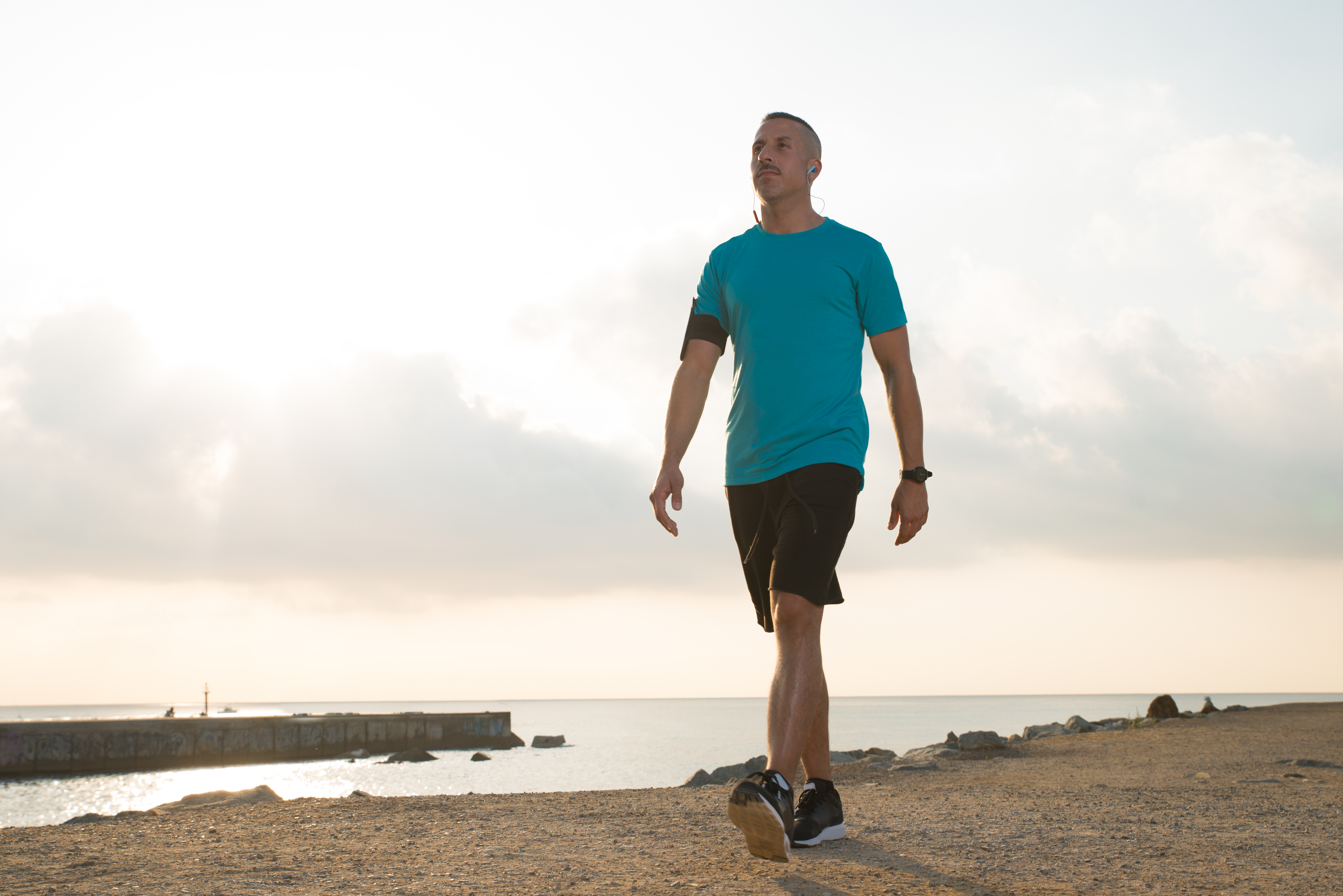
The 10,000 steps target is everywhere. Fitness trackers default to it, wellness articles push it, and somewhere along the way it became the universally accepted benchmark for daily movement. I wanted to know what the research actually supports and what happens to the body when you commit to it consistently for a month.
So I did it. Thirty days, 10,000 steps minimum, tracked carefully. Here's what changed, what didn't, and what the science says about why.
Where the Number Actually Came From
Most people don't know this: the 10,000 steps target has no clinical origin. It came from a Japanese marketing campaign in 1965 for a pedometer called the Manpo-kei, which translates to "10,000 steps meter." The number was chosen partly because the Japanese character for 10,000 resembles a person walking. It was a slogan, not a prescription.
The research that followed has been largely supportive, though more nuanced than the marketing suggests. A 2019 study in JAMA Internal Medicine tracked over 16,000 older women and found mortality risk decreased progressively with more steps, leveling off at around 7,500 steps per day. A 2022 study in JAMA Internal Medicine using UK Biobank data across roughly 78,500 adults found that more steps up to around 10,000 were associated with lower rates of mortality, cardiovascular disease, and cancer incidence across a broader age range.
The honest takeaway: the research supports moving more, consistently. The specific number matters less than the sustained upward shift in daily activity.
Week 1: The Logistics Problem
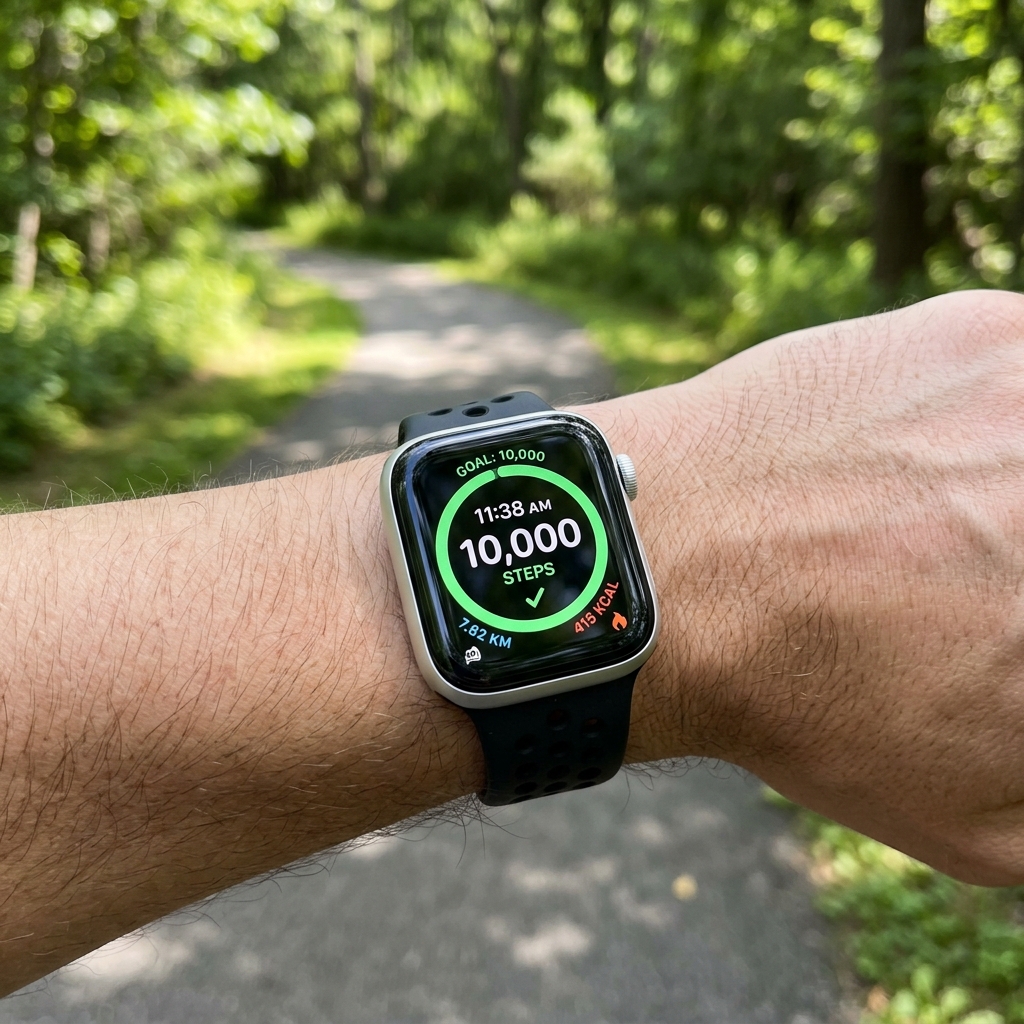
The first thing I discovered was how few steps a normal day actually contains. I assumed I was hitting 6,000 to 7,000 without trying. My tracker said 4,200 on most weekdays. Desk work, a short commute, and general household movement added up to less than half the target.
Closing the gap required roughly 45 to 60 additional minutes of walking per day. I split it into a 25-minute morning walk before work and a 20 to 30-minute evening walk. I also took stairs consistently, parked further away, and walked during phone calls.
By day seven I had hit the target every day but one, a travel day that landed at 9,400 steps. The energy cost in week one was real. Legs felt heavy around days four and five, not sore exactly, more like accumulated low-grade fatigue. It cleared by day eight.
Week 2: The First Real Shifts
Steady Energy
The afternoon energy slump became noticeably less severe. Better focus from 2pm to 4pm.
Better Sleep
Falling asleep in 10-15 mins compared to 25-30 mins previously.
Stable Mood
Less irritability in the afternoons thanks to endorphin release and reduced stress.
The fatigue resolved and something more interesting replaced it. The afternoon energy slump became noticeably less severe. I was moving through the 2pm to 4pm window with better focus and less of the cognitive drag I had normalized as just how afternoons feel.
Sleep improved. I was falling asleep in roughly 10 to 15 minutes compared to the 25 to 30 minutes that had been typical. Diet, caffeine timing, and screen habits were unchanged. Research consistently shows that regular moderate exercise improves sleep quality and reduces time to sleep onset, with mechanisms involving both adenosine accumulation from physical activity and improved thermoregulation afterward.
Mood felt more stable through the day. Less irritability in the afternoons. Exercise has well-documented effects on mood through endorphin release and reduced stress hormone activity, though I'm cautious about attributing too much to a single behavior change within two weeks.
Week 3: Measurable Changes
By week three the habit was largely automatic. This is when the numbers got more interesting.
67 bpm
Resting HR
Down from 72 bpm
-1.4 kg
Weight Loss
No diet changes
Better
Lower Back
Reduced stiffness
Resting heart rate dropped from 72 beats per minute at the start to 67 by day 21. That reflects improved cardiac efficiency and is consistent with what exercise physiology research predicts from three to four weeks of regular moderate aerobic activity.
Weight dropped by 1.4 kilograms over the first three weeks without any dietary changes. At 10,000 steps, most people burn an additional 300 to 400 calories per day compared to a sedentary baseline depending on body weight and pace. That accumulates across 30 days even without deliberate caloric restriction.
Lower back stiffness, a persistent low-level issue from desk work, improved noticeably. Walking engages the hip flexors and glutes in ways that prolonged sitting compresses and shortens. The daily movement acted as a consistent counterbalance to eight hours of postural load.
Week 4: What Held and What Didn't
The sleep improvements, lower resting heart rate, and steadier energy through the day all held through week four. These felt like genuine physiological adaptations rather than novelty effects.
The mood improvement was less consistent in the final week. Whether that reflects adaptation, normal variability, or the initial novelty wearing off is impossible to say from a single self-experiment.
By day 30 total weight change was 2.1 kilograms. Modest, but consistent with what increased daily energy expenditure predicts over a month without dietary modification.
The habit itself had become low-friction. The morning walk replaced a period of scrolling. The evening walk became a natural boundary between work and the rest of the day.
The Honest Limitations
A personal 30-day experiment is not a controlled study. I cannot isolate walking as the only variable, and subjective assessments of mood and energy carry obvious bias.
The 10,000 step target is also not universally appropriate. The 2019 JAMA research found benefits plateaued around 7,500 steps for older women specifically. People with joint conditions need a more gradual ramp-up. Those already highly active will not see the same magnitude of change that previously sedentary individuals do.
What I Would Tell Someone Starting
Find your actual baseline first
Most people significantly overestimate their daily movement. Knowing your real starting point makes the gap concrete and the progress trackable.
Don't jump from 3,000 to 10,000 immediately
Adding 1,500 to 2,000 steps per week until you reach the target produces better adherence and less early dropout from excessive fatigue.
Split the daily total
Two 25-minute walks are logistically more flexible and easier to protect when the day gets unpredictable than one long walk.
Expect a 10-day adjustment
The first ten days require deliberate scheduling. After two weeks it stops feeling like something added to the day and starts feeling like part of it.
"The changes that felt most durable after 30 days were better sleep, a lower resting heart rate, reduced lower back stiffness, and steadier energy through the day. None of them were dramatic in isolation. Together they added up to a meaningfully different baseline."
Walking 10,000 steps daily requires no equipment, no gym, and no dietary overhaul. What it requires is consistency, and that consistency is exactly what makes modest daily habits compound into significant outcomes over months and years.
Thirty days in, I haven't stopped.