Losing 10 pounds of pure fat in 2 weeks is physiologically impossible for most people — it would require a daily deficit of 17,500 calories, which exceeds what the human body can burn. However, losing 3–6 lbs of true fat combined with 4–7 lbs of water weight and glycogen in 2 weeks is achievable with the right approach. This guide explains exactly what is realistic, and the fastest evidence-based approach to losing weight safely.
The Honest Truth Most Blogs Won't Tell You
Type "how to lose 10 pounds in 2 weeks" into Google and you will find hundreds of articles promising it is possible with the right diet or workout plan. Almost none of them explain the basic mathematics that make this claim misleading.
One pound of body fat contains approximately 3,500 calories. To lose 10 pounds of fat in 14 days, you would need to burn 35,000 more calories than you consume — or 2,500 calories per day above your total daily energy expenditure.
The average person burns 1,800–2,500 calories per day in total. Creating a 2,500 calorie daily deficit would mean eating nothing at all while exercising intensely for hours. This is not achievable — and attempting it through severe restriction causes muscle loss, metabolic damage, hormonal disruption, and nutrient deficiencies.
Lasting Metabolic Damage
So what is actually possible in 2 weeks?
The answer is more nuanced — and more encouraging — than most people expect.
Medical Warning
A 500–750 calorie deficit combined with high-intensity training is an acute stressor. See the full medical warning at the bottom of the page before proceeding.
1. What the Scale Actually Shows in 2 Weeks
When people report losing 10 pounds in 2 weeks, they are typically measuring a combination of three very different things:
True Fat Loss (2–4 lbs in 2 weeks)
Genuine adipose tissue reduction through a sustained caloric deficit. With a consistent 500–750 calorie daily deficit, 2 weeks produces approximately 2–3 lbs of true fat loss. This is real, permanent weight loss that does not return when you resume normal eating.
Glycogen and Water Loss (3–6 lbs in the first week)
Your muscles and liver store carbohydrates as glycogen — approximately 400–500 grams in total. Each gram of glycogen is stored with approximately 3–4 grams of water. When you reduce carbohydrate intake or create a caloric deficit, glycogen stores deplete rapidly in the first week, releasing 3–6 lbs of water weight. This explains the dramatic first-week results many people experience. It is real weight loss on the scale — but it is not fat loss, and it returns when normal eating resumes.
Digestive System Contents (1–3 lbs)
Reducing food volume, increasing fibre, and staying hydrated can produce 1–3 lbs of scale reduction from changes in digestive contents alone.
The Realistic 2-Week Breakdown
| Weight Type | Expected Range | Longevity |
|---|---|---|
| True Fat Loss | 2–4 lbs | Permanent (with maintenance) |
| Glycogen & Water | 3–5 lbs | Temporary (returns when eating normalises) |
| Digestive Contents | 1–2 lbs | Variable |
| Total Scale Change | 6–10 lbs Realistic Drop | |
So losing "10 pounds in 2 weeks" on the scale is achievable — but understanding what those 10 pounds actually are is essential for setting sustainable expectations and not being devastated when some of it returns.
2. The Fastest Evidence-Based Approach: What to Do in 2 Weeks
If you have 2 weeks and want to see the maximum realistic results, here is what the research supports — in priority order.
Step 1: Create a 500–750 Calorie Daily Deficit (Non-Negotiable)
The caloric deficit is the only mechanism through which fat loss occurs. A 500–750 calorie daily deficit is the maximum evidence-supported range that produces fat loss without triggering significant adaptive thermogenesis or muscle catabolism.
Use the following approach to calculate your target:
- Estimate your TDEE (Total Daily Energy Expenditure) using a validated calculator
- Subtract 500–750 calories
- This becomes your daily calorie ceiling
A 2014 study in the International Journal of Obesity confirmed that a 500–750 calorie deficit produces the optimal ratio of fat loss to muscle preservation over short intervention periods — faster deficits increase muscle loss disproportionately.
What you should not do: Eating fewer than 1,200 calories (women) or 1,500 calories (men) per day to accelerate results. Below these thresholds, muscle loss increases dramatically, nutrient deficiencies develop rapidly, and metabolic adaptation begins within days.
Step 2: Dramatically Reduce Refined Carbohydrates and Sodium
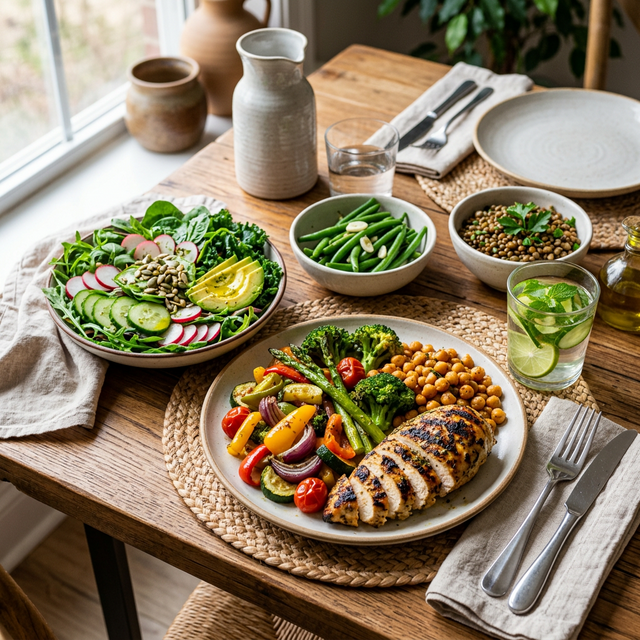
Replacing refined carbs with lean proteins and non-starchy vegetables accelerates early water weight loss.
This step accelerates glycogen depletion and reduces water retention — producing rapid scale results in days 1–5 that are motivating and real, even if not purely fat loss.
- Eliminate for 2 weeks: Bread, pasta, rice, and other refined grains; sugary drinks, juice, and alcohol; ultra-processed snacks and fast food; added salt beyond cooking minimums.
- Replace with: Lean protein sources at every meal; non-starchy vegetables (unlimited quantity); legumes and some whole grains in moderate portions; water, black coffee, unsweetened tea.
Research in the New England Journal of Medicine (2008) found that low-glycaemic diets produced significantly greater water weight loss in the first 2 weeks compared to higher-carbohydrate diets, while total fat loss over longer periods was comparable. For a 2-week goal, this gives a significant early advantage on the scale.
Step 3: Eat High Protein at Every Meal
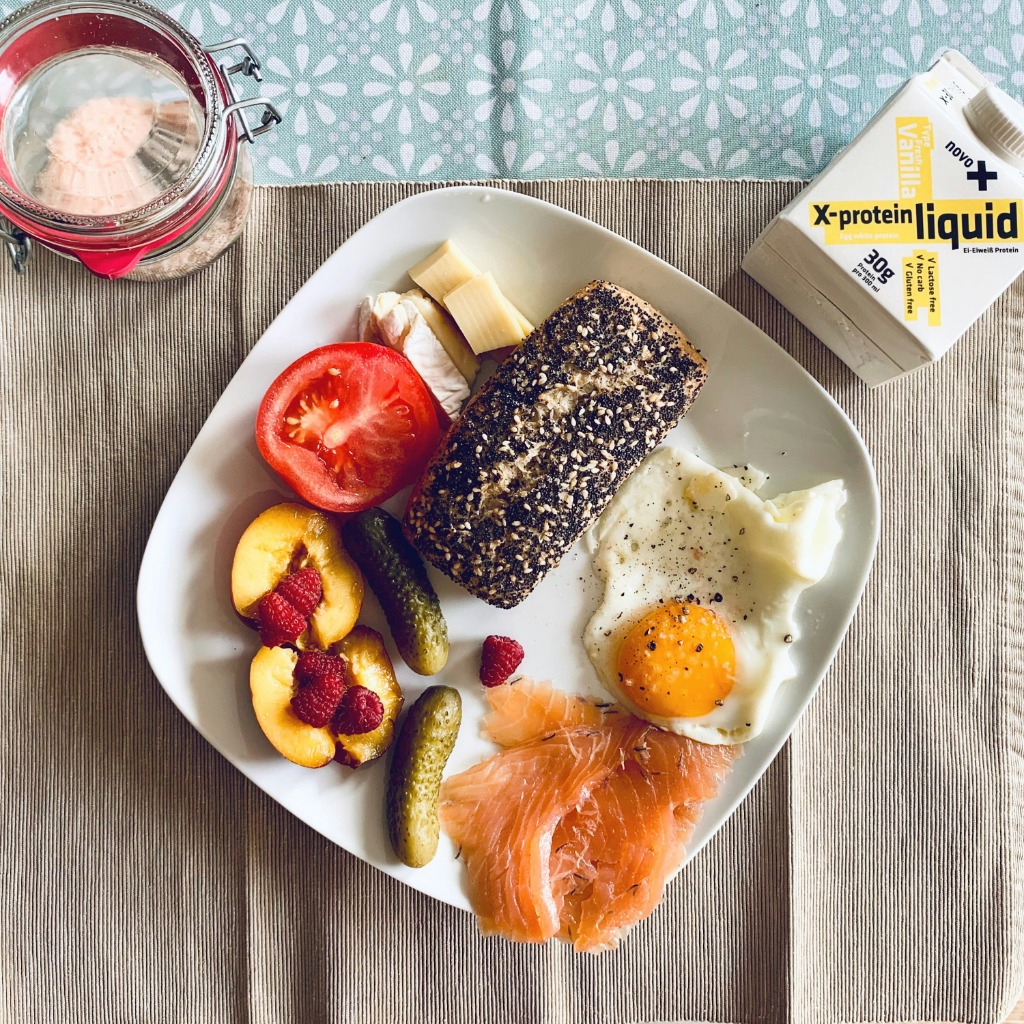
Protein is the most important macronutrient during a short-term fat loss phase.
Protein is the most important macronutrient during a short-term fat loss phase. It preserves muscle mass during the deficit, significantly increases satiety (making the caloric restriction easier to maintain), and raises daily calorie burn through its thermic effect.
Research in the American Journal of Clinical Nutrition (2005) found that increasing protein to 30% of total calories reduced daily calorie intake by 441 calories on average — without any conscious restriction.
Target: 0.8–1.0 grams of protein per pound of body weight daily. Lean sources provide the highest protein for the lowest caloric cost:
- Chicken Breast: ~31g protein per 100g (165 calories)
- White Fish (Cod/Tilapia): ~24g protein per 100g (105 calories)
- Egg Whites: ~11g protein per 100g (52 calories)
- Non-Fat Greek Yogurt: ~10g protein per 100g (59 calories)
- Cottage Cheese (Low Fat): ~11g protein per 100g (72 calories)
🔗 Related: How Much Protein Do I Need?
Step 4: Add Strength Training (3 Sessions in 2 Weeks)

Strength training sends a signal to preserve muscle tissue, ensuring weight lost comes primarily from fat.
During a caloric deficit, the body's default is to burn both fat and muscle for energy. Strength training sends a signal to preserve muscle tissue.
A 2013 study in the FASEB Journal found that participants in caloric deficit who performed resistance training preserved significantly more lean mass than those doing only cardio — despite identical caloric deficits and total weight loss.
2-Week Strength Protocol (3 sessions)
- Full body workouts each session
- Focus on compound movements: squats, deadlifts, push-ups, rows, lunges
- 3–4 sets of 8–12 reps per exercise
- Moderate weight — challenging but not to failure
- 45–60 minutes per session
You do not need a gym. Body weight movements performed consistently produce the muscle preservation signal.
Step 5: Add HIIT 2–3 Times (For EPOC and Calorie Burn)
HIIT (High-Intensity Interval Training) burns calories during the session and elevates metabolic rate for up to 24 hours afterward through the EPOC effect — making it the most calorie-efficient form of cardio for a short time frame.
A 2011 study in the European Journal of Applied Physiology confirmed significant EPOC elevation following HIIT sessions.
- Frequency: 2–3 sessions, 20–25 minutes each (Do not do HIIT on the same days as strength training)
- Format: 30 seconds maximum effort, 60 seconds recovery, repeat 10–12 rounds
- Options: sprinting, cycling, jump rope, burpees, jumping jacks
🔗 Related: 10 Fat-Burning Exercises for Weight Loss
Step 6: Maximise Daily Steps (NEAT)

NEAT (Non-Exercise Activity Thermogenesis) is a crucial driver of calorie burn.
Target 10,000–12,000 steps per day. Over 14 days, this adds up to 2,800–5,600 additional calories burned.
🔗 Related: How Many Steps a Day to Lose Weight?
Step 7: Optimise Sleep (7–9 Hours Per Night)

Sleep is the most underutilised fat loss tool in any short-term programme.
A 2010 study demonstrated that sleeping 5.5 hours versus 8.5 hours while in caloric deficit reduced fat loss by 55% and increased muscle loss by 60%.
Step 8: Drink Adequate Water
Target 2.5–3.5 litres of total water daily. Replace all caloric beverages to remove hidden calories that are often underestimated.
3. Your Complete 2-Week Plan
Nutrition Rules (Non-Negotiable)
- Daily calories: TDEE minus 500–750
- Protein: 0.8–1.0g per pound of body weight
- Track every meal for 14 days
Exercise Schedule
| Day | Activity | Duration |
|---|---|---|
| Day 1, 4, 6 | Strength training (full body) | 45–60 min |
| Day 2, 5 | HIIT + 10,000+ steps | 25 min + steps |
| Day 3 | Active recovery — brisk walk | 45 min |
| Day 7 | Rest + 10,000 steps | Steps only |
| Day 8-14 | Repeat pattern above | — |
Download the Daily Habits Tracker
Get the exact 2-week checklist (PDF) to stay strictly on track with water, macros, sleep, and workouts.
4. What a Realistic 2-Week Meal Plan Looks Like
Sample Day (Approximately 1,500–1,700 calories, 140–160g protein)
- Breakfast: 3 whole eggs + 3 egg whites scrambled, handful of spinach, black coffee (~230 calories)
- Lunch: 150g grilled chicken breast, large mixed salad, 1 tbsp olive oil dressing, 1 cup lentil soup (~440 calories)
- Snack: 200g non-fat Greek yogurt, handful of berries (~160 calories)
- Dinner: 150g white fish, 200g roasted broccoli/courgette, 150g cooked chickpeas (~450 calories)
Adjust portion sizes based on your individual calorie target.
5. Why Some Weight Returns After 2 Weeks (And How to Prevent It)
When people follow an aggressive 2-week protocol and then return to normal eating, they typically see some scale weight return within days.
Glycogen and water return: When carbohydrate intake increases back to normal levels, glycogen stores refill and bring water with them. This can add 3–5 lbs to the scale within 3–5 days. This is not fat regain — it is a physiological normalisation.
The solution: After the 2-week phase, transition to a moderate 300–500 calorie deficit rather than returning immediately to maintenance or surplus.
Frequently Asked Questions
Ready to find your starting numbers?
To lose those initial pounds safely, you need to know exactly how many calories to consume. Stop guessing and use our free calculator.
Go To Calorie CalculatorSources & References
- [1] Fothergill E et al. (2016). "Persistent metabolic adaptation 6 years after The Biggest Loser competition." Obesity.
- [2] Thomas DM et al. (2014). "Time to correctly predict the amount of weight loss with dieting." International Journal of Obesity.
- [3] Nedeltcheva AV et al. (2010). "Insufficient sleep undermines dietary efforts to reduce adiposity." Annals of Internal Medicine.
- [4] Levine JA et al. (1999). "Role of nonexercise activity thermogenesis in resistance to fat gain in humans." Science.
Who Should NOT Attempt This Protocol
A 500–750 calorie deficit combined with high-intensity training is a significant acute stressor on the body. It is completely inappropriate for:
Medical Warning
- Anyone with a history of eating disorders: Can trigger disordered eating patterns.
- Pregnant or breastfeeding women: Caloric restriction endangers fetal/infant development.
- Thyroid or severe adrenal issues: Can further suppress thyroid function and elevate cortisol.
- Type 1 or Type 2 Diabetes: Can cause severe hypoglycemia without medical supervision.
- Teenagers and children: Must not restrict calories during developmental years.

Hassan Khan
Health Researcher & Founder
Hassan Khan is a health researcher and writer specializing in evidence-based nutrition and fitness. He founded Natural Health Basics to bridge the gap between peer-reviewed research and practical daily health guidance.
Full Medical Disclaimer
The information on Natural Health Basics is for educational purposes only. It is not medical advice or as a substitute for professional diagnosis or treatment. Always consult with a qualified health provider regarding underlying conditions.