
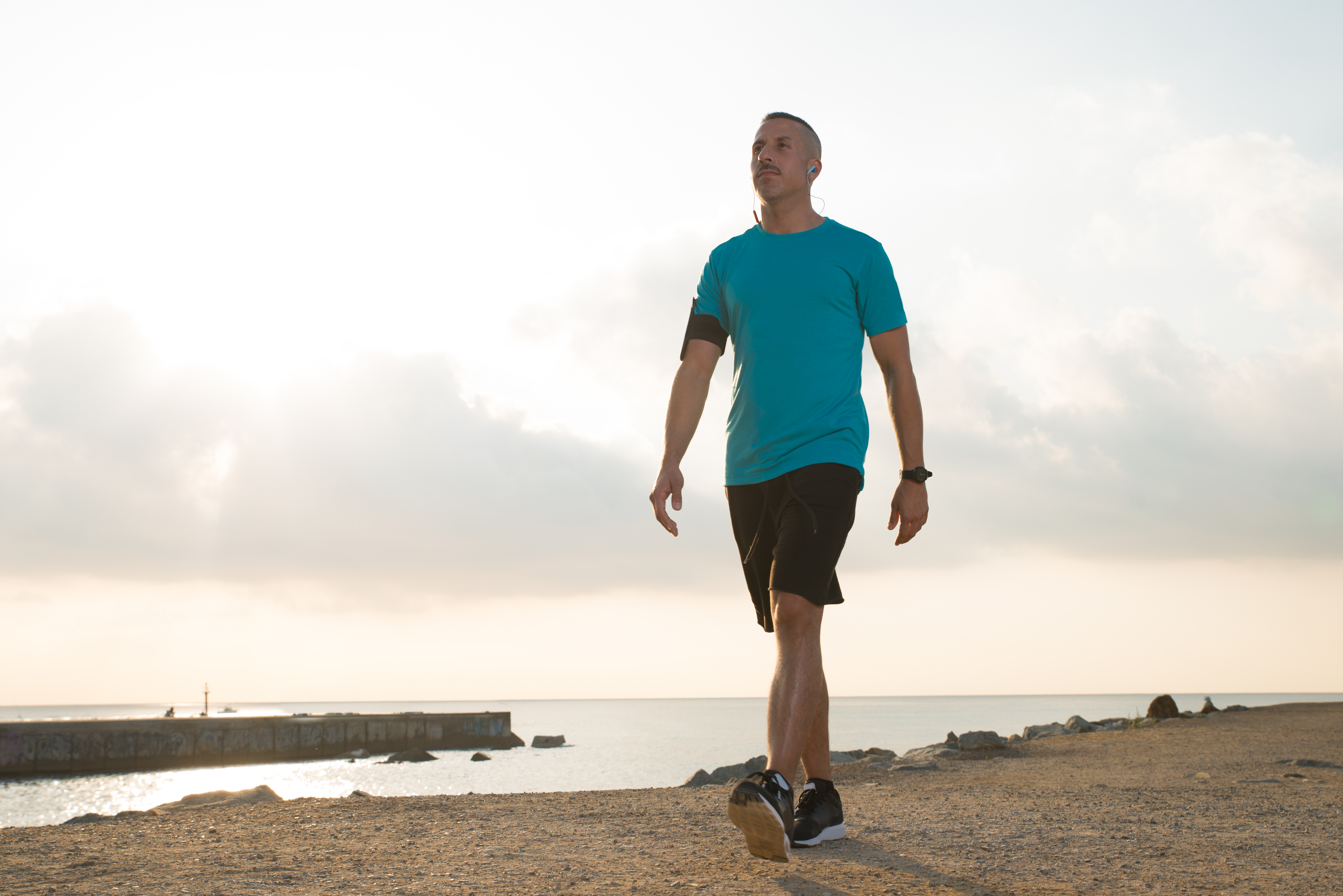
"Yes — walking helps you lose weight by increasing energy expenditure, reducing visceral fat, improving insulin sensitivity, and lowering stress hormones. It's not the fastest, but it is the most sustainable."
Walking is the most accessible form of exercise on the planet. Yet most people dismiss it as "not enough" for weight loss. The research, however, tells a different story.
A large prospective study published in the British Journal of Sports Medicine (2017) followed 50,000 walkers and found that regular brisk walking was associated with a 24% lower risk of all-cause mortality. More specifically, a 2014 meta-analysis found significant reductions in body fat, waist circumference, and BMI across all age groups.
1. How Walking Causes Weight Loss
Caloric Expenditure
Walking burns calories directly. The exact amount depends on your speed and weight. At 150 lbs, walking briskly for 30 minutes daily burns ~160 calories—compounding into 4,480 extra calories burned per month.
Visceral Fat Reduction
Walking has a disproportionate effect on deep abdominal fat. A 2014 study showed significant reductions in visceral fat with just 50-70 minutes of walking 3 times per week.
NEAT Amplification
Walking increases your Non-Exercise Activity Thermogenesis. Increasing structured walking usually leads to being more active across the whole day, multiplying the true caloric impact.
Hormonal Effects
Unlike intense exercise, moderate walking lowers cortisol levels. Elevated cortisol drives abdominal fat storage, making walking's stress-lowering effect uniquely valuable for fat loss.
Calorie Burn Estimates (per 30 min)
| Body Weight | Slow (2 mph) | Moderate (3 mph) | Brisk (3.5-4 mph) |
|---|---|---|---|
| 120 lbs (54 kg) | 85 cal | 107 cal | 127 cal |
| 150 lbs (68 kg) | 107 cal | 135 cal | 160 cal |
| 180 lbs (82 kg) | 128 cal | 162 cal | 193 cal |
| 210 lbs (95 kg) | 150 cal | 189 cal | 224 cal |
2. How Much Walking Do You Need?
7,000 Steps: The Minimum
Research in JAMA Network Open found that 7,000 steps per day was associated with a 50-70% lower risk of mortality and is the threshold where weight loss starts to impact body composition.
8,000–10,000 Steps: The Weight Loss Zone
The "gold standard" for consistent fat loss outcomes. This equates to ~4-5 miles per day. A 2018 study found participants at 10k steps lost significantly more body fat than those below.
12,000+ Steps: Accelerated Results
For those with a solid base, stepping up to 12k-15k per day produces additional weekly fat loss purely through movement without further dietary restriction.
Step Target GuideWalking vs. Other Exercise
vs. Running
Running burns 2x more calories per minute, but over 6 years, research shows comparable reductions in BMI when walkers burned equivalent total energy. Walking has 1-5% injury rates vs. 19-79% for running.
vs. HIIT
HIIT burns more per minute, but dropout rates are 35-45% vs. 15-20% for walking. Sustainability wins the long-term fat loss game.
The Ideal Strategy:
- Caloric deficit through diet (most impactful)
- Strength training (preserves muscle)
- HIIT (efficient burn)
- Daily walking (sustainable burn & hormonal health)
4. How to Maximize Fat Loss
Increase Pace
Brisk walking (3.5-4 mph) burns 50% more calories than slow walking for the same distance.
Use Inclines
A 5% incline increases calorie burn by 17%. A 10% incline increases it by 32%.
Post-Meal Walks
15-minute walks after meals improve glycemic control and reduce insulin spikes.
Weighted Vests
Adding 10% body weight in a vest increases calorie expenditure by 8-12%.
Walking Poles
Nordic walking engages the upper body, boosting burn by 20-46%.
Accumulate Steps
Three 10-minute walks are just as effective as one 30-minute walk.
Realistic Expectations
7k Steps
0.5-1 lb
per month
10k Steps
1-1.5 lbs
per month
10k Brisk
1.5-2 lbs
per month
12k+ Steps
2-3 lbs
per month
*Estimates based on no dietary changes. Combining with a deficit yields 2-4 lbs/month.
6. The 4-Week Fat Loss Plan
The Habit Builder
Goal: 7,000 steps. One dedicated 20-30 min walk per day.
The Volume Up
Goal: 8,500 steps. One 30-40 min brisk walk + one 10 min post-dinner walk.
The Power Phase
Goal: 10,000 steps. One 40-50 min brisk walk + 2 post-meal walks.
The Maintenance Mode
Goal: 10-12k steps. All 3 post-meal walks. 10k steps should feel automatic.
Accelerate Progress